Please read the following article, a full research paper (5370 Words) on �Quranic Approach to Cognitive & Behavioral Change: Psychological Perspective.� Dr. Kirmani is a Research Scholar, Department of Psychology, Aligarh Muslim University, Aligarh. We hope to continue to receive his perspective on different aspects of Islam from a Psychologist's point of view.
At the Aligarh Muslim University conference, Dr. Kirmani was very involved in all aspects of the conference. Indeed, he was a big supporter of women�s right during the panel discussion on Gender issues � he stepped in to the informal discussions whenever it was needed. I looked up to him for support and he gave that needed support.
Dr. Kirmani, and I hope to work together in taking on people like Subramanian Swamy, Taslima Nasreen � not to defeat, embarrass or show them their place, but engage them in a civil conversation, where they cannot produce the back up for some of their claims, that they throw in regularly. That is how we gain the �un-sure Indians (they don�t want to believe the Swamy but unless they have an alternative they won�t have a choice)� into seeing facts, a few at time for the common good of our society. It�s a long term process and we have to do it patiently.
I am proud of our friendship, and glad he has the heart and mind to passionately.
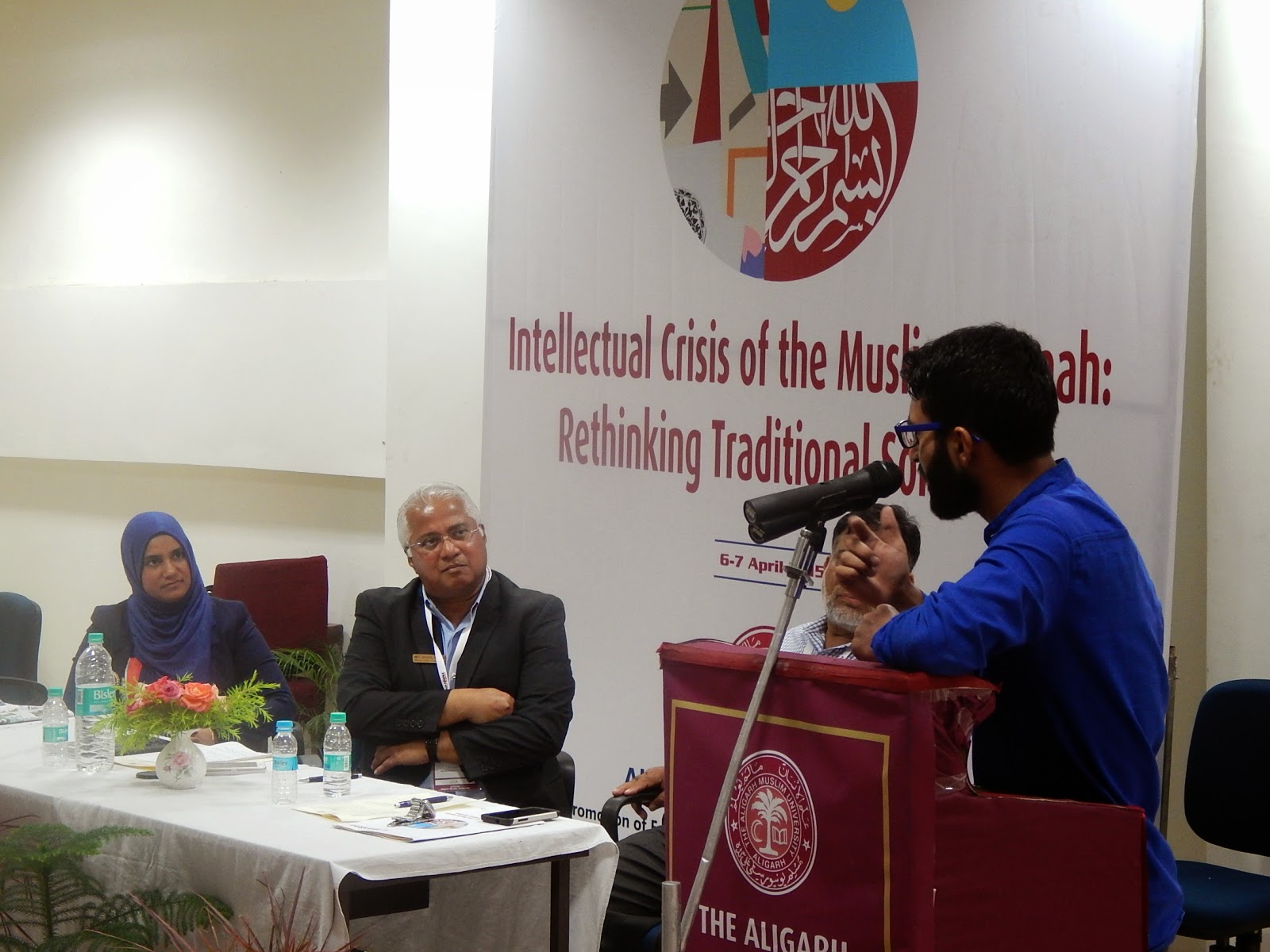
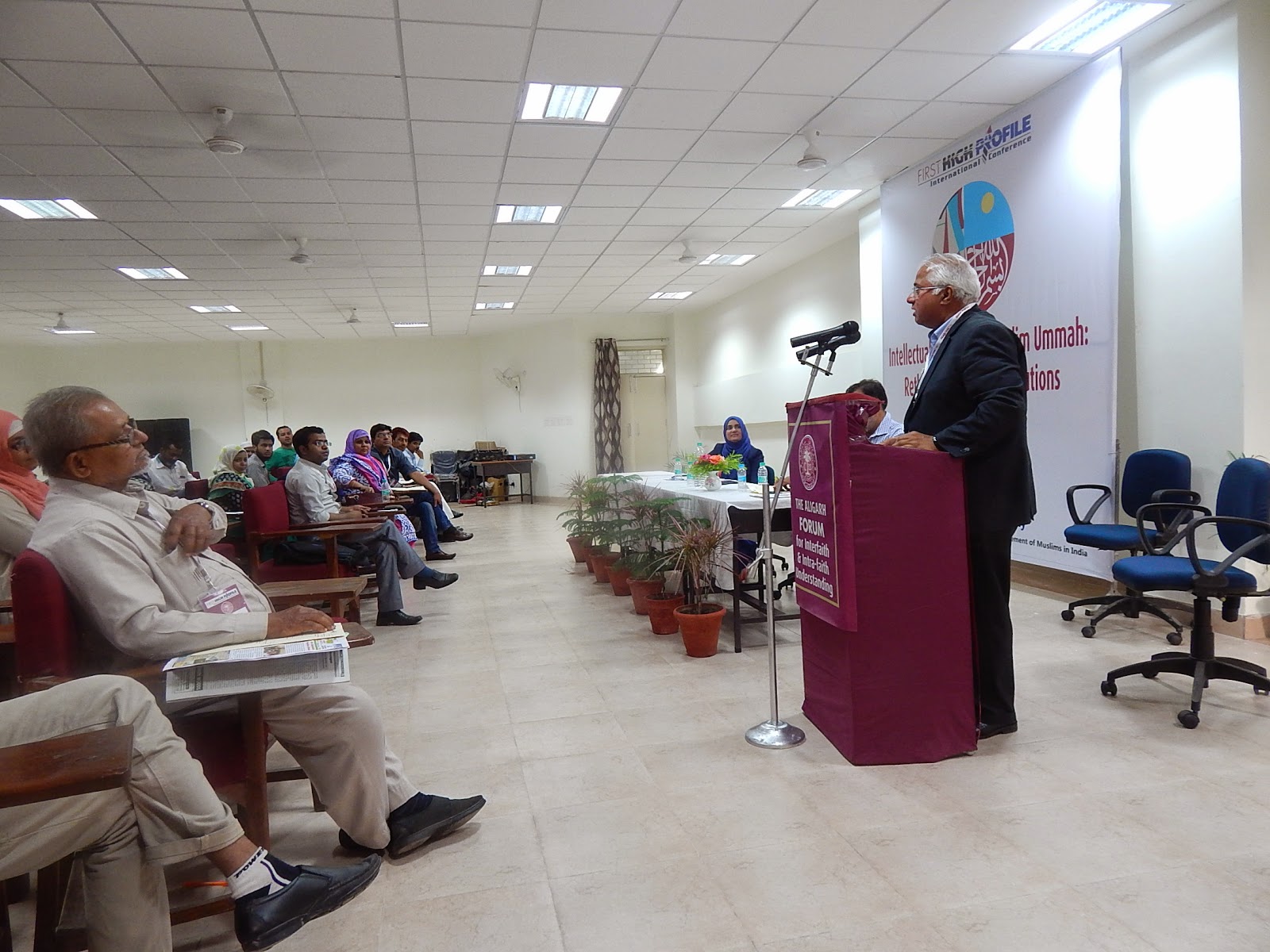
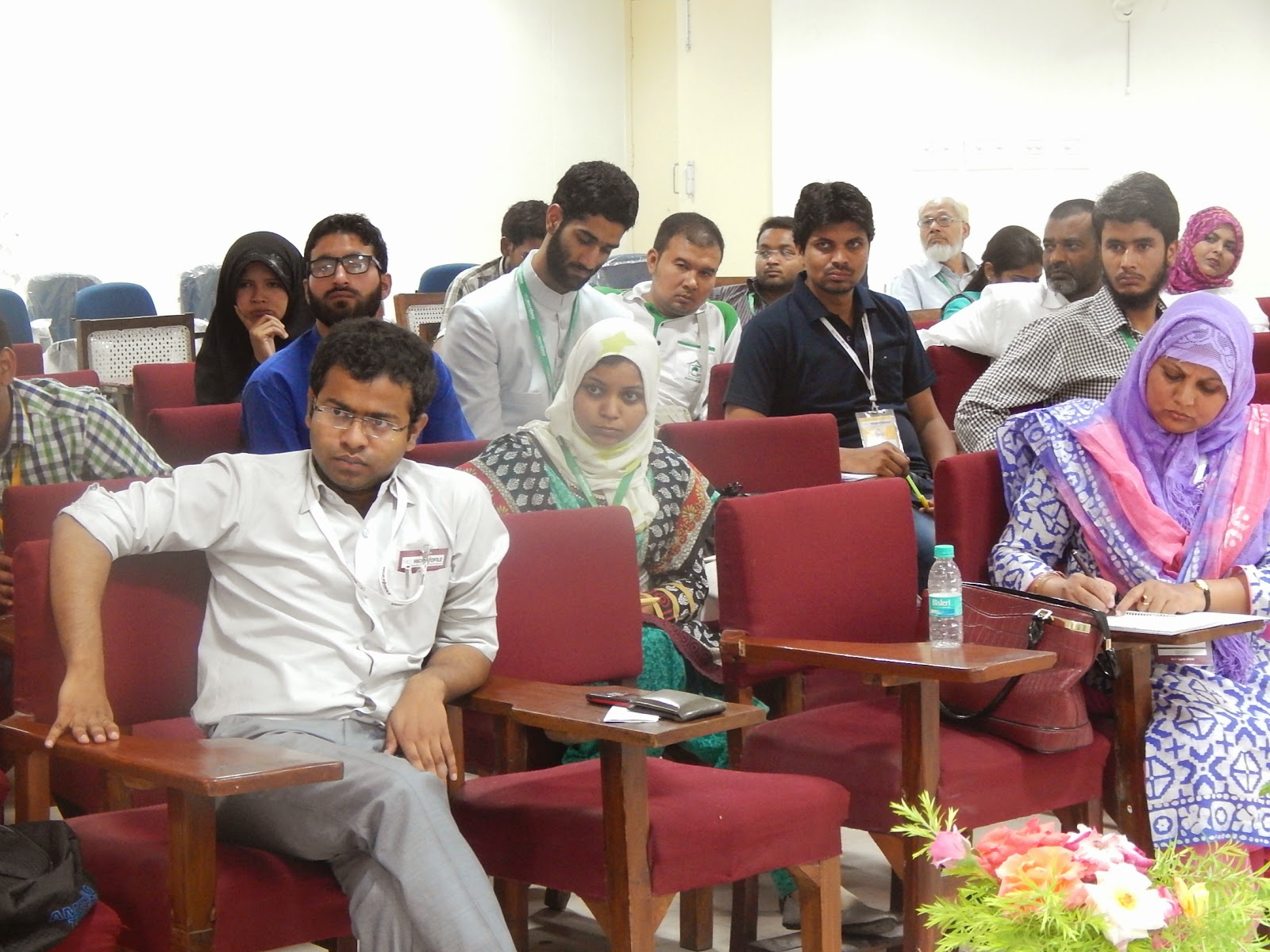
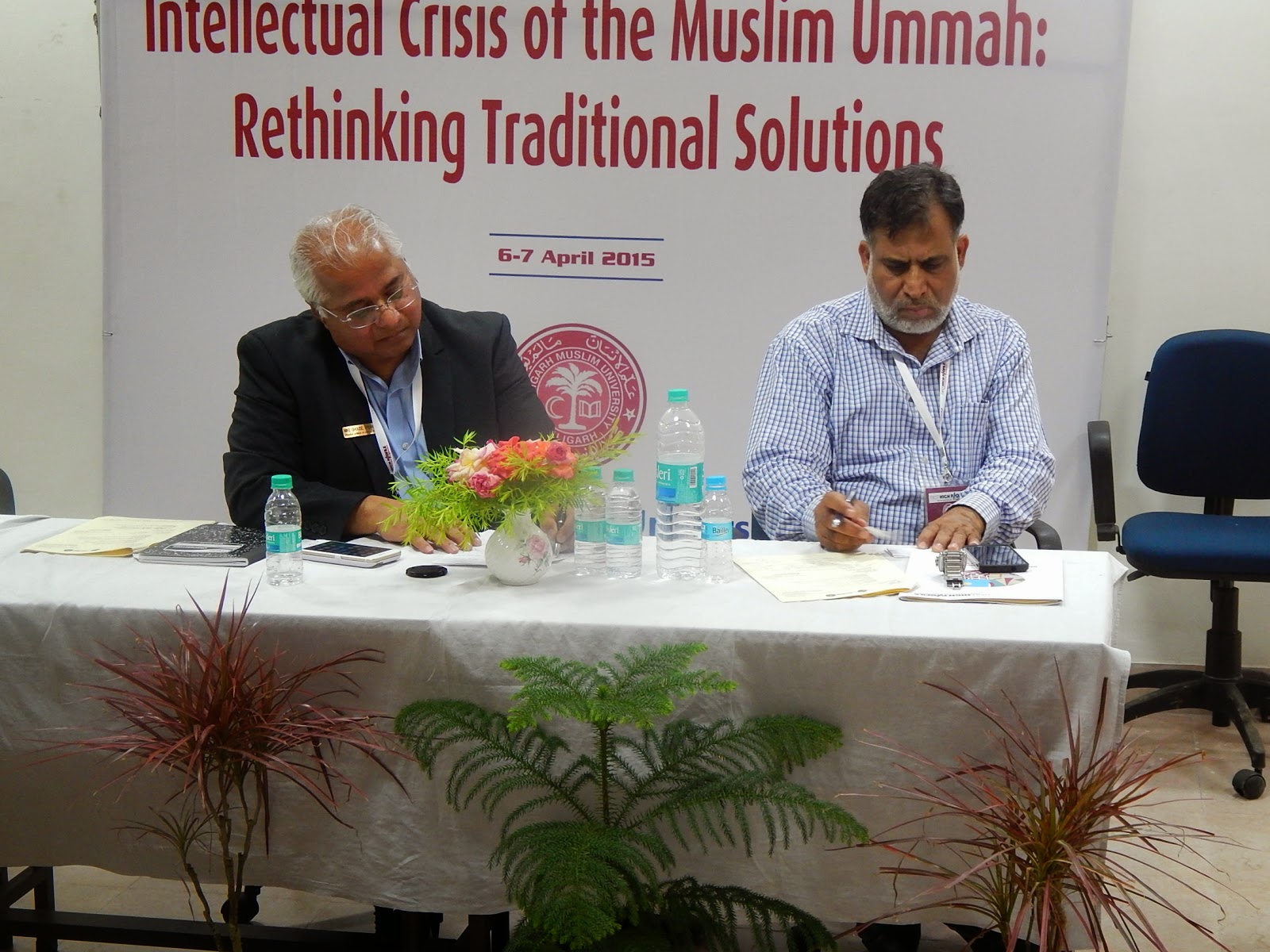
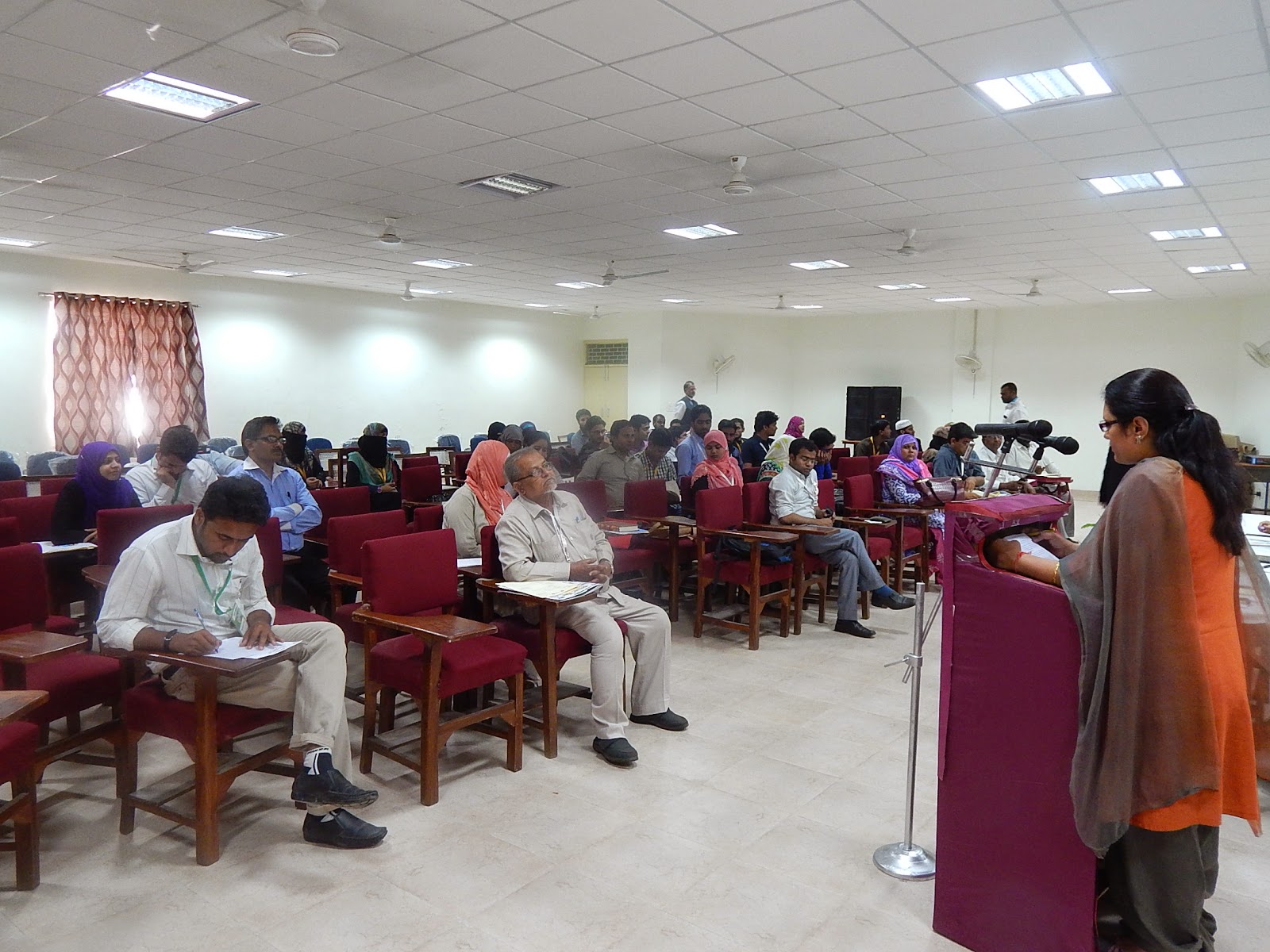
Please read, comment if you wish, and forward. Two pictures from the campus are shared at the bottom of the article.
Mike Ghouse
WorldMuslimCongress.com
# # #
Qur�anic Approach to Cognitive & Behavioral Change: Psychological Perspective
Mustafa Nadeem Kirmani*
Abstract
Quran is the message from Allah that was revealed on Prophet Mohammed (P.B.U.H) in a span of 23 years. Quran and Prophet Mohammed�s actions (Sunnah) are the core of Islam. The purpose of Qur�anic message is to guide human kind in all spheres of their life and thereby improve human condition and quality of life. Guidance in a broader sense means changes in people�s beliefs and subsequently their actions. Reverting to Islam is also guidance and doing any action which brings either one�s own or others� welfare in a just way is also guidance. Human beliefs , thoughts and attitudes often refer to as cognitions and overt actions are known as behaviors. Quran aims to bring positive changes in one�s beliefs and actions which will ultimately lead to positive changes at an individual and at social level. Allah in Quran clearly states that Prophet Mohammed is the role model for all of us in all spheres of life. Allah wants human beings to become responsible and pro active beings for their own behaviors. Negative psychological states like blaming others, fault finding tendencies and defensive strategies to ward off undesirable behaviors are strongly condemned in Quran. It aims to make people aware about their own behaviors, feel and take responsibilities of what they do. Quran advocates the principle of self-responsibility and inspires people to be proactive and responsible agents to bring positive change. This paper will attempt to integrate Quran and behavioral and cognitive approach in a scientific way to bring changes in human thoughts and behaviors.
*Research Scholar, Department of Psychology, Aligarh Muslim University, Aligarh
Mobile no: 08267871886
Note: The author is professionally trained and License Clinical Psychologist
Introduction
Holy Quran was revealed on Prophet Mohammed (P.B.U.H) in a span of 23 years. Its message was sent through Archangel Gabriel and the nature of message depends on the particular requirement and situation which demands that. In total, 114 chapters (Surahs) were revealed in 23 years.
Quran and step by step behavioral change
The very fact that Allah took 23 years to complete the message of Quran clearly indicates that bringing change in people�s behavior and cognitions is a gradual process. The term �cognitions� means people�s thoughts, beliefs, attitude and perception. Allah used evolutionary rather than revolutionary approach to bring change in the existing belief of the people and society at large during that time. Human psychology is best known to Allah and so gradual and step by step process was used to reveal Quranic message in 23 years so that the message sinks in human psyche with ease and also the to avoid resentment and rebellious behavior which often occurs in using revolutionary approach to bring change. History has taught us that changing governments and social structures through revolutionary approach often cause violent confrontations and bloodshed. Behavior scientists and psychologists also believe that step by step and gradual changes are often long lasting and more persistent.
This basic behavior change principle is often used by Clinical Psychologists in the process of psychotherapy and counseling to bring change in their clients� behavior. In psychological interventions of substance and alcohol abuse, this principle is most often employed. The therapist motivates the clients to slowly decrease their substance abuse or alcohol intake so that the process of de addiction itself becomes easy and to reduce the dropout rate during therapy. The same approach was used in Quran to reduce alcohol drinking from the Arab society of those times. In yet another verse in Quran, Allah says that it is revealed in stages, �Thus it is revealed, that We may strengthen thy heart thereby, and We have rehearsed it to thee in slow, well-arranged stages, gradually� (25:32). Allah explicitly explains here that the purpose of revealing it in stages is to strengthen its message so that it becomes clear to human beings and sink into human mind so that executing it becomes easy. Research in psychological sciences and in educational psychology has also shown that spaced learning is often better than massed learning. Spaced learning means learning step by step and not in bulk. Its implication is if the behavior change is desired at an individual level or group level, slow and step by step approach should be used to bring the change.
Quran & behavioral discrepancy
In another verse Allah says �O ye who believe! Why say ye that which ye do not?� (61:2). This verse means that whatever people say, they should also do that. There should be harmony between their sayings and actions. Words and actions should go hand in hand. There should be consonance between actions and sayings. If a person says something and does something, unpleasant psychological state will be experienced by him/her. Psychologists call that state of mind as dissonance. This state is so unpleasant that people are motivated to undo this unpleasant condition. To undo or reduce this state, various defensive or other psychological strategies are utilized by people. Quran categorically states that people should live in harmony with their sayings and behaviors. Their behaviors in day to day life should reflect what they preach/say in their sermons. If there is some discrepancy between their sayings and behaviors, it will be modelled by others who watch and listen to them. Even children who observe them will imitate the same behavioural pattern. Psychologist, Bandura in 1977 posits that behaviors are acquired and learned by observing the behaviors of others and has been shown in many experiments. For psychologists behaviors are not only overt actions but also internal thoughts. The emphasis of Quran to say and act in the same direction has significant implications for brining change in oneself and others. If the society has people who give sermons and instructions to others to follow a set of behaviors, but themselves don�t follow them will create chaos among people and will have significant negative implications. First, people and children will learn just to give sermons without applying them in their life by observing this trend in the social system. Clinical and empirical work on families have shown that inconsistency between what the parents say and do to their children is often the source of conflicts in many family systems. So, Allah strongly condemns this behavioural practice in Quran. There is a strong need to reflect on this aspect of behavior so that attempt is made to bring consistency between what people say and do. Psychological interventions with the integration of Quran can help people becoming more aware about their behavioral discrepancies. Psychological interventions like Johri window technique can be of great help in brining consistency between people�s sayings and actions.
Quran and pro active behavior
Quran presents human beings as proactive and responsible agents of change. Allah says in Quran �We never changes the conditions of those who first change themselves� (8:53). One of the authentic hadith says first tie your camel, then expect from Allah. This is the revolutionary message from Quran. It gives the message of action oriented approach. The Quran inspires people to first perform action then expects help from Allah. This is a dynamic initiate taking approach which will increase volition taking tendencies in human beings. Hagar exemplies this in her search for water for her son Ismail in a remote desert without any company and only a bag full of dates and some water. Hagar was nourished by Allah through divine intervention. Yet such intervention on the part of Almighty resulted not simply from Hager�s prayers but more importantly from her efforts to find help on her own. This implies that activism and self-initiation are integral aspect of piousness/taqwa, not simply passive faith in Allah. This will help a person to learn problem solving skills.
Self-regulation and Quran
Allah says in Quran "O ye who believe! Fasting is prescribed to you as it was prescribed to those before you, that ye may learn self-restraint� (2: 183). The research on self-regulation has been extensively done by Baumeister and Exline (1999, 2000). Self-regulation refers to the self�s altering its own responses. Self-control helps in resisting temptation, refocus attention, alter a mood or emotional state, overcome fatigue and other ways to change their behaviors and emotions. Self-regulation contributes greatly to the flexibility and diversity of human behavior. It has implications for moral behaviors. If people did not have the capacity to alter their behavior, moral rules would be useless. Self-regulation principle helps people realize the wrongness of their actions, but they would be powerless to change those actions. Self-regulation is a master virtue because self-regulation is necessary for people to behave virtuously and avoid vice or sin. Baumeister and Exline through their research on this variable pointed out the importance of centrality of self-regulation to moral behavior. The behavior of being glutton refers to overeating and possibly engaging in other pleasures to excess. Failure to regulate eating behavior is a classic example of a lack of self-regulation. People also need self-control to overcome sloth, or laziness. Sloth means the failure to override the impulse either to stop working or to continue doing something other than working. When the desire for these inappropriate goals arises, people must exert self-regulation in order to override the urge to act in pursuit of the goal. The first cardinal virtue, prudence, refers to weighing long-term implications and risks when making decisions or acting. Prudence is related to the ability to forego immediate gratification for the sake of a greater, delayed benefit. Self-regulation also helps in being just or doing what is morally right. Quran gives a lot of importance on the virtue of justice. There are many verses related to justice in Quran (10:44, 10: 54, 36: 54)). In one the verses in chapter 4 Allah says ��O you who have believed, be persistently standing firm in justice, witnesses for Allah, even if it be against yourselves or parents and relatives. Whether one is rich or poor, Allah is more worthy of both. So follow not [personal] inclination, lest you not be just. And if you distort [your testimony] or refuse [to give it], then indeed Allah is ever, with what you do, Acquainted�(4:135).
This is essential to understand that justice as a behavior is not just a group behavior but also occurs at individual level too. Behavior which violates the rule of justice often cause lots of problems at home, in organizations, society at large and at national and international level. Let�s give common day to day example. If any parents do not allow the daughter to go for higher education but allows their son to go for the same and similarly if mate selection choice for nikah is allowed for the son but the same is not approved if done by the daughter, it becomes a source of conflict between the daughter and the parents simply because the parents violates the rule of justice commanded by Allah.
Temperance refers to being moderate rather than excessive; the ability to refrain from excess also requires self-control. Fortitude is to remain resolute despite adversity. It means to be resilient. This courage or firmness demands self-control to overcome the desire to compromise and thereby escape one�s suffering. Each of these virtues as highlighted in Quran also seems to hinge upon the ability to control oneself.
Ability to delay gratification has been studied as a classic example of self-control (Mischel, Shoda, & Peake, 1988).Similarly, poor behavioral self-regulation often leads to impulsivity in which people act out in anger, have poor consequential thinking and impaired judgment. This behavioral dysregulation often leads to interpersonal conflicts, issues at work place and host of other issues. Thus, poor self-regulation creates multitude of interpersonal, family related and legal issues. Quran�s emphasis on learning to have self-regulation skills have significant implications in life and can bring lots of positive behavioral changes in people. Self-regulation is a skill that can be learned. Often it is found that children learn poor self �regulation from their parents through observing them. It is, therefore, essential that Quran be read not just as a religious book read rather a book to be comprehended and followed to bring positive changes in the behavior so that children and others will the same behavioral pattern.
Quran and assertive behavior
Being assertive is associated with feeling confident with oneself, managing interpersonal relationships, expressing one�s true feelings politely etc. Assertiveness does not mean aggressiveness. Assertiveness means expressing one�s ideas, opinions, feelings politely and directly to the person without infringing her/his personal rights. Unlike assertiveness, being aggressive means infringing on others� rights and to hurt other person. It has been observed that aggressive people are often ignored by others and slowly their social circle becomes very small and they remain in their own shelves. Quran gives a wonderful example of an assertive lady (58: 1) who discussed her issue with Prophet Mohammed regarding the prevailing biased custom of Zihar during those days.
Allah says in Quran �God has heard the statement of she who argued with you concerning her husband, as she complained to God. God heard your conversation. God is Hearing and Seeing. � (58:1).
In this situation, the woman is suffering for none of her fault. Secondly, important point to be noticed here that Quran does not condemn the behavior of that woman with Prophet Mohammad as she was raising genuine concern for her. It simply means that voices against injustice be raised in an affirmative and assertive however. It was her assertive discussion with the Prophet which finally led to the termination of that biased custom following the revelation of that verse subsequent to that woman�s assertiveness. Another example of assertive behavior is by a lady named Fatima who raised voice when Caliph Umar put restriction on the amount of mehar to be paid by husbands to their wives. Being assertive is a skill not a born trait so it can be learned. Parents can teach their children to be assertive through their own behavior when parents themselves behave in assertive fashion not aggressively. Another way by which assertive skills can be taught is through script techniques in which examples of assertive behaviors need to be told through stories. Following are steps used in assertive skills training:
a) Specify the behavior to be learned
b) Discuss the steps of those behavior
c) Do a role play
d) Feedback and rehearse
This and many other verses of Quran which condemns unjust behavior should become the actual source in training programs to teach assertive behavior to children and others.
Quran and interpersonal conflict management: Salam Model
Quran teaches a wonderful behavior principle to resolve conflict. Allah says in Quran �The servants of the Merciful are those who walk the earth in humility, and when the ignorant address them, they say, �Peace� (25:63). It often occurs that some people either knowingly or unknowingly keep passing or saying words or sentences to others to irritate them. In another verse, Allah condemns behaviors of passing comments, bad remarks and taunting behaviors. This often causes conflicts among them. To avoid any confrontation, Quran teaches a simple behavioral strategy to resolve this issue. It teaches that if such people try to irritate them, the best way is just to say �Salam� to them and walk away. It may work twofold. It will not create a situation of conflict and secondly by passing reverse gretting in the Salam might motivate them not to repeat that behavior again and even can help to nurture relationship with the person who was the target. This is what I call as �Salam Model� of interpersonal conflict management. This need to be practiced at home, work place and the situations where in such conflicts may arise.
Social group conflict management and Quran
Conflicts at group, social, cultural, national and international level mostly arises because of ethnocentric beliefs in some groups. Ethnocentrism means feeling and thinking that my group is �superior� to any other group. It may be in terms of one�s religion/faith, language, region, community etc.Common observation shows that human beings share more similarities than differences. Psychologists have even shown in their research work that even expression of emotions have similarities among different cultures. Quran uses a shared common approach to resolve this group conflict issues. Allah says in Quran � to God� (3:65). This Quranic model of knowing and discussing similarities between/among conflicting groups can be a wonderful approach of group conflict resolution. Interpersonal and group conflicts often take place because of ethnocentric belief and negative stereotypes that people hold of each other. One of the psychological strategies to deal with this is to provide knowledge to people about groups and their similar characteristics. One of the verses from Quran helps in imparting knowledge base training to shed stereotypes and highlight similarities among people. Allah says in Quran �and confound not truth with falsehood nor hide the truth, knowingly�(2:43). This verse from Holy Quran can be an inspiring for educators, policy makers, administrators, religious leaders to be utilized for imparting knowledge about others without any partiality as explicitly stated in the verse. Transpiring prejudice against other groups is clear violation of the basic principle of Quran. Integrating this Quranic verse in conflict resolution training can work wonders and can bring relative peace in society. If schools develop curriculum which focus on similarities of different groups, negative stereotypes and prejudiced cognitions may not develop in young children and hence when they grow they will be having less prejudiced.
Reasoning and psychology of reflection in Quran
Quran uses the word fu�ad for reasoning. It is used in the Quran in reference to both the emotional and intellectual elements of the human beings. Human emotions like love, fear or affinity influence people�s reasoning and judgement.It urges believers and others to use their intellect and reasoning skills to reach at conclusions. The Quran promotes an approach to knowledge and learning in which reason is given prominence. Blindly following anything is condemned in the Quran. Allah says �And do not pursue that of which you have no knowledge. Indeed, the hearing, the sight and the heart - about all those [one] will be questioned� (17:36).
In another verse the Quran states �Surely the worst of beasts in God's sight are those that are deaf and dumb and do not reason� (8:22). Here deaf and dumb do not mean in physical sense rather as a metaphor and emphasized the importance of using reasoning skills. Allah teaches us to invite others the message of Quran also in a logical way. Allah says �Invite [all] to the Way of thy Lord with wisdom and beautiful preaching; and argue with them in ways that are best and most gracious: for thy Lord knoweth best, who have strayed from His Path, and who receive guidance. This methodology of inviting others has psychosocial implications. Using wisdom, logic and understanding the situation and context before inviting is highlighted in this verse. This can be used in class room situation wherein teaching be done in such a way to make sense and logical so that it becomes meaningful.
Quran often uses the word tadabbur for reflecting thinking. Tadabbur helps us to reach on conclusions after reflected on the content once it is processed in the brain. Teaching and training children in reflective thinking using the Quran as a source will help them enhance their thinking and decision making skills.
Psychology of moderation and Quran
Moderate person is the one who leads a balanced life and avoids extreme perspectives and steers away from excessive behavior and extravagant life. Moderation is central to the moral discipline emphasized by the Quran. The Quran directs Muslims to seek moderate path in all spheres of life. One of the theories of emotion also highlights this that human emotions remain balance anger follows love, loves follow anger (Solomin, 1980). Moderation is the basic principle of the Quran to be followed (55; 7-9, 2: 143, 91: 7-10, 10:83). Allah says in the Quran �Make not thy hand tied [like a niggard's] to thy neck, nor stretch it forth to its utmost reach, so that thou become blameworthy and destitute� (17:29). The Quran states �O Children of Adam! wear your beautiful apparel at every time and place of prayer: eat and drink: But waste not by excess, for Allah love not the wasters (7:31). In another verse Allah says �But waste not by excess: for Allah love not the wasters� (6:141). These moderate behaviors in different domains of life can taught to others through script interventions, modeling and reinforcement. If the parents and other authority figures do not follow moderate behaviors, it becomes very difficult to inculcate these skills in others as it has already been discussed in this paper that sayings and actions should go together otherwise it work. In fact it may backfire and children will learn behavioral excesses.
The principle that one should not take on responsibilities beyond one�s ability to deliver and sustain is repeatedly emphasized in the Qur�anic teachings and the prophetic statements.
�On no soul doth Allah Place a burden greater than it can bear. It gets every good that it earns, and it suffers every ill that it earns� (2:286). Bukhari and Muslim reported that the Prophet said: Focus on your goal and try your best and know that no one will enter paradise merely through his own deeds and the best of deeds are those that endure even if they were of little significance.
The implication of the mentioned Qur�anic verse and the Prophet�s statement is that teaching, training and expectations should be as per one�s abilities and children and people should attempt to give their best and teachers and administers should keep realistic expectations from the employees and students based on their abilities.
Modeling of Prophet�s behavior
The Quran is very categorical that Prophet Mohammad (P.B.U.H) is the best model to be followed in all domains of life. Allah says �Ye have indeed in the Messenger of Allah a beautiful pattern [of conduct] for any one whose hope is in Allah and the Final Day, and who engages much in the Praise of Allah� (33:21). Psychologists assert that modeling is a form of learning which takes place directly or even indirectly or vicariously. Through modeling most of the traits are acquired by those who model. There is a strong need to instill the idea of overall modeling of behavior not just some specific attributes. It can take place through telling scripts of Prophet�s life events, and his behaviors at different levels of life. He as a husband, as a father, as a teacher, as a neighbor, as an administrator, as an army person etc need to be told not just his physical attributes. Our prophet used to reflect on the world and ponder over it. Even reflecting on the world thinking that it is being done to appreciate Allah is a form of ibada. He was called as trustworthy by the Arab society even by those who were against him. The fact that being trustworthy is a behavioral trait and reflects in day to day behavioral transactions and not a reflection of physical attribute is a point need to be emphasized among masses so that modeling of his behaviors takes place which are key to give message others.
Behavioral paradigm and Quran
Quran is very clear on the concepts of rewards and punishments. Quran makes explicit that pious behaviors (2:177) will be rewarded in the form of Heaven and sinful behaviors will be punished in the form of Hell. Quran also highlights the fact that punishment should be proportionate to the nature of sinful behavior done. So, the psychology of fear and psychology of reward is being highlighted and emphasized in the Quran. Clinical psychologists use the same principles in their behavioral approaches of treatment in working with their clients.
Marital relationship and Quran
Quran uses a metaphor of garment for husband and wife. Allah says in Quran �They are your garments and ye are their garments (2:187). In yet another verse Allah says �It is He Who created you from a single person, and made his mate of like nature, in order that he might dwell with her in love� (7:189). Quran gives the right to both spouses of selecting their marital partners. No one can force them to marry out of force. It also teaches the approach to resolve marital conflict by asking members from each family to try to resolve the issue (4:35). Quran also highlights a wonderful way of separating in case both the spouses and any one does not want to live in wedlock. Quran asserts that if there is no way to reconciliation, the spouses be get separated in peace and kindness without mudslinging (2:229). Quran highlights to the level of giving some gift to the wife before separating with peace. The current clinical work on family and marital therapy evolved the same model of separating with ease. This model intervention is often known as divorce seeking therapy. It is a paradoxical statement that therapy is being sought for divorce rather than resolving conflicts. The idea of this intervention is the same as mentioned in the Quran to get separated peacefully and with kindness.
Psychology of hope and Quran
Positive psychology model emphasizes on human strengths and resources rather than limitations. It studies variables like resilience, positive emotions like happiness, hope etc.Synder (1995) an American psychologist gave hope model and focused on agencies and pathways. It means the construct of hope will help people to have specific goals and executing ways to reach the goals. People who hare realistically hopeful will attempt to solve issues and will attempt to become solution oriented. The Quran keep emphasizing and motivating its believers to be hopeful and never lose hope from Allah. (39:53, 12:87).Reading and contemplating Qur�anic verses related to hope will help people developing cognitions of hope and at the same time along with hope, proactive approach as mentioned in the Quran will push an individual toward goal attainment.
Self-esteem enhancement and Quran
Psychologists define self-esteem as one�s own evaluation in terms of good or bad traits. Self-esteem is developed through the feedback of others and through our own evaluation on the basis of the criteria set by the person herself/himself. Self-esteem is a global construct not just measured in any one aspect. Poor self-esteem is associated with anger outbursts, depression, poor academic and work performance. Quran raises the self �esteem of people by saying that �Allah honored the children of Adam�(17:70). Allah also says in Quran �We have created humans in the bet of moulds� (95:4). It implies that human beings are born with various skills in terms of physical, behavioral and intellectual ones. The skills need to be known to us and used for our own and others� welfare. Prophet�s method of focusing on people�s positive actions and discussing their limitations personally not in public aids in maintaining people�s self-esteem. Quran and Prophet�s behavioral approaches need to be integrated in the current system to facilitate changes in their behaviors and cognitions.
Quran and Social psychology of Rumor
Rumor is one of the most important causes of violence and riots in the world. Social psychologists define rumor as �a piece of information that is being passed from one person to another without verification�. The word without verification is the key in this definition. Quran trains people to use a behavioral strategy on the same principle to avoid spreading of rumors. Allah says in Quran �O ye who believe! If a wicked person comes to you with any news, ascertain the truth, lest ye harm people unwittingly, and afterwards become full of repentance for what ye have done� (49:6). The basic teaching of this verse is to ascertain the truth of the information being given to us before reacting or passing the same information to others. Since Allah has made human beings the most intellectual beings having lots of skills (Ashraful Makhlooqaat), it is our responsibility to decide which information needs to be ascertained. Common sense says that the information which may have significant negative implications if passes on to others must be checked. Lots of work in the area of social psychology has shown that hundreds of people had died because of riots broke out because of false information being passed on to others. A book named �Psychology of Rumor� was published in 1944 written by Robert Knapp and similarly �Rumor clinic� was established by Gordon Allport in the same Year to reduce the rumor crises as rumors led to deaths of thousands of people in the USA. Quran already taught us this principle so that human crises and violent confrontations and sacred human life can be saved.
Conclusions
Quran aims to bring positive changes in people�s thoughts and behaviors. The term guidance as used in Islam is a very broad term and does not mean just reverting to Islam. It means seeking help from Allah in any spheres of life be it be very small sphere or large. Even reverting to Islam is nothing but change in one�s belief�s and cognitions which in turn follows change in behavior. Psychologists believe that bringing changes in thoughts facilitate change in behavior. Similarly changes in behaviors in turn can bring changes in one�s cognitions and thoughts. Understanding and reflecting on the content of Quran is assumed to bring changes in people�s cognitions and behaviors. It will work as a sort of bibiotherapy and through contemplation and reflections, possible cognitive restructuring may take place. There is a strong need to familiarize Quran and its message among masses. Its message needs to be popularized not only among Muslims but also among non-muslims in a way that appeals people and its message sink in their head. Qur�anic methodology of logical reasoning and understanding the audiences� emotional and mental receptive state is the key in communicating the message of Quran to others. It is extremely essential that the message of the Quran be communicated as the possible solution to the contemporary issues at individual, group, national and global level. To make the message effective, it is all the more important that speakers, writers, leaders etc should themselves use Quran in their own life as a book of Divine guidance in resolving their day to day issues.
Future Directions
- Quran be used in schools, colleges, universities and other institutions irrespective of their faith as a tool to solve human problems.
- Professional and academic psychologists develop treatment modules based on the Quran.
- Training programs to Imams, Muftis, and other post holders in mosques to use Quran as a source of solution to many psychosocial issues as there are very few trained mental health professionals in India and even in the Muslim world. Mosques will become the source of discussing and finding human psychosocial problems.
- To change people�s socially inspired cognitions to true Qur�anic cogntions.
- Current Islamic laws to incorporate mental health issues before announcing punishment/penalties to offenders to avoid the chances of being unjust in the punishment procedure.
References
Ali. A.Y. (1987). The Holy Koran. King Fahad Holy Quran Printing Complex: Saudi Arabia
Allport, G & Postman, G. (1951). Psychology of Rumor, Russel & Russell Publication, USA.
Bandura, A. (1977). Social learning theory. Englewood Cliffs, NJ: Prentice Hall.
Baumeister, R. F., & Exline, J. J. (1999). Virtue, personality, and social relations: Self-control as the moral muscle. Journal of Personality, 67, 1165�1194.
Baumeister, R. F., & Exline, J. J. (2000). Self-control, morality, and human strength. Journal of Social and Clinical Psychology, 19, 29�42.
Mischel, W., Shoda, Y., & Peake, P. K. (1988). Delay of gratification in children. Science, 244, 933�938.
Solomon, R.L. (1980). The Opponent-Process Theory of Acquired Motivation: The Costs of Pleasure and the Benefits of Pain. American Psychologist, 35, 8, pp. 691�712
Snyder, C.R. (1995). Conceptualizing, measuring and nurturing hope. Journal of Counseling and Development, 73, 355-360.
 The Aligarh Muslim University has made the 4th place in the best Universities ranking in India by the Nielsen Survey. News from India today group report on July 8, 2015 that it is an upward journey for this historical institution as it was ranked sixth in 2014 and eighth in 2013.