Showing posts with label Hijab. Show all posts

Monday, 21 March 2016

German Muslim Woman does not want to wear Hijab

0 Comments
Indeed, she makes a lot of sense. Its the essence she understands over ritual. Please look for some 15 articles on Hijab in this site - through the Search box.  We should be pro-choice, let the woman decide and not the men.

Mike Ghouse

Why I as a Muslim Woman Don't Wear a Headscarf

Lamya Kaddor
Courtesy - Qantara

 
The German Islam Scholar Lamya Kaddor
Does the Koran really demand that women wear headscarves? Or is it mainly older men who claim they can decide how women should dress � with no theological foundation whatsoever? For the Islam scholar Lamya Kaddor, there is no question about it: the headscarf is obsolete
?If I as a Muslim woman living in Germany ask myself whether I should wear a headscarf or not, that gives rise to the question of whether the additional head-covering called for in the Koran (33:59) still fulfils its original purpose of protecting women from male desire. My answer is: no. In contemporary Germany such covering-up no longer serves that purpose. It is even more likely to bring about the opposite of what God intended by exposing wearers of headscarves to discrimination.
Today the intended protection against 'annoyances' is provided by a well-functioning legal system rather than by adherence to social rules from the past. A free state based on the rule of law protects a woman, for example by punishing attacks on her person. This protection may be primarily concerned with bodily integrity, but people in a modern state are more than ever responsible for themselves with regard to the freedoms accorded � including in the realm of moral integrity. Covering my head cannot relieve me of that responsibility. I cannot hide myself behind a little piece of cloth. A free and democratic state grants rights and also imposes responsibilities. In such circumstances I can behave honourably with and without a veil or head-scarf � or not, as the case may be.
A 'fashion accessory' from Koranic times?
If this argument is accepted, one can also abandon the Koranic demand for additional covering, directed towards women in Early Arabic tribal society. What would still initially remain is the khim�r, the head covering that was part of women's clothing at that time. The Koran neither speaks against nor in any way emphasises that form of covering. God uses the word only once in the Koran (24:31). That occurs in passing in connection with a call for moral behaviour. So there is no Koranic emphasis on such head covering. However, if God had required a special head covering, would He not have said so explicitly? The khim�r thus merely constitutes a 'fashion accessory' according to the spirit of that age. Viewed rationally, functions consciously or unconsciously associated with head coverings across the course of history � such as protection against sand or evil influences � are all superannuated today and have lost their validity. People's powers of imagination have changed.
Female students with and without headscarf (photo: picture-alliance/dpa)
"Sura 24:30-31 calls on both men and women to behave chastely, but exegesis of the Koran up to the present day only puts the emphasis on chaste behaviour for women," Kaddor writes
??
In the Germany of the twenty-first century � at the very latest � women's hairstyles are no longer per se an erotic stimulus. The sight of head-hair no longer provokes sexual fantasies and thus immoral behaviour � except perhaps among fetishists. When you walk along a city's pedestrian precincts no one turns to look at you because of your hair. Only if you dress provocatively or in a particularly original way, and behave accordingly, do you attract some attention. In addition, this isn't a male world that still thinks as it did a thousand or more years ago. Thanks to the achievements of a free and democratic state, and thanks to the prevalent understanding of relations between the sexes, you no longer necessarily need a head covering in order to live morally. The headscarf has become obsolete.
Misogyny by Islamic scholars
Today's orthodox comprehension of the obligation to wear a head covering is primarily based on the interpretations of scholars who lived several generations after the Prophet Mohammed. One can follow their judgements but they are not sacrosanct. As human beings all scholars are fallible. Conservative and fundamentalist circles constantly emphasise that our behaviour should follow the Koran and the Prophet. Their spokesmen maintain that this directly accords with what was laid down during the Prophet's lifetime and the initial period of Islam.
Koran (photo: fotolia/lapas 77)
The depiction of the headscarf as a unifying element within the Muslim community is not well founded, Kaddor argues
??
However in reality this view is mainly based on the ideas of scholars who lived some 600 (!) years later � such people as Ibn Qud�ma (d. 1223), Ibn Taym�ya (d. 1328), or the latter's pupil Ibn Qayyim al-Jawz�ya (d. 1350). Bearing in mind the patriarchal social structures of that time, it is unsurprising that interpretations of sources concerning relations between the sexes were usually unfavourable for women � even though that contradicts a striving (to be found throughout the Koran) towards improving women's situation. That tendency is even less surprising if one recalls the misogyny demonstrated by many scholars throughout the history of Islam. Linking shame and a head covering is by no means as self-evident as it seems. Sura 24:30-31 calls on both men and women to behave chastely, but exegesis of the Koran up to the present day only puts the emphasis on chaste behaviour for women.
No political symbol
Nevertheless, the Koranic injunction to dress in a way that is generally demure remains a religious demand, to be fulfilled by wearing 'appropriate' clothing. A woman believer sees this as signifying that all those parts of the female body which nowadays excite the idea of possible sexual contact should continue to be 'properly' concealed beneath the kind of clothing usual today. What is entailed in 'proper', 'appropriate', or 'decent' is left to the reasonableness of every mature woman citizen, since at present there are no specific directives based on Islamic sources. In prevalent practice, it is mostly older men � learned or unlearned � who assume the right to determine how a woman should appear, but there is no theological or sociological foundation for this.
A similar situation prevails regarding evaluation of the headscarf as a token of Islamic faith. Such a function cannot be demonstrated in the history of Islam. The depiction of the headscarf as a unifying element within the Muslim community is not well founded either. In addition, its function as a political symbol, so frequently evoked in public discussions today, also constitutes a historically unfounded inflation of the significance of this item of clothing. This has occurred only in recent decades, as an element in the opposition to Western influences within the Islamic world.
Lamya Kaddor � Goethe-Institut 2011
Lamya Kaddor was born in 1978 in Ahlen, Westphalia, as the daughter of Syrian immigrants. As a student she specialised in Islamic Studies, and went on to train Islamic teachers of religion at M�nster University. Since the 2003-04 school year she has been involved as a teacher in the 'Islamic Studies in the German Language' project. Her most recent book is "Muslimisch � weiblich � deutsch! Mein Leben f�r einen zeitgem��en Islam" (Muslim � Female � German! My Life for an Islam in Keeping with the Times), C.H. Beck Verlag, Munich 2010. This text is an abbreviated version of a study published in Thorsten Gerald Schneider's Islamverherrlichung [Glorification of Islam], VS Verlag, Wiesbaden 2010, pp. 131�158.
Editor: Lewis Gropp/Qantara.de

Sunday, 13 March 2016

Our national dress is the shalwar kameez, not the niqab

0 Comments

No dress can be called a national dress, as most of them evolved over a period of time, indeed dress is a cultural expression of a given society. Dress is cultural, and each culture tends to be different every 250 miles apart.   Pakistan is an exception in this regard, where a dress was labeled as a national dress and almost every Pakistani has at least one pair of such clothing.

When it comes to clothing, particularly Hijab, we need to be pro-choice, that is  a woman should have the freedom to wear what is comfortable to her, as a majority of women tend to be modest no matter what faith or culture they come from. No Taliban brute should force her to cover up completely or French brute to force them to wear fewer clothes. Neither of them respects woman's choices.

The full covering has been around for centuries in different formats, but only a small percent of Muslims women wore that,  the French statistics were quoted at 3% of Muslim women wearing burqa, and I believe it was less than 10% in early 20th century in the subcontinent.


I hope some one can take the time to put the dates on the critical changes, that is, when did a mass movement to wear Hijab (the fashionable head covering) began. Tentatively, I place the date to be 2000 AD, so we can discuss and arrive at a more precise date.  

I recall my late wife who had never worn any sort of Hijab, made an announcement one morning at the breakfast table,  that she will start wearing the Hijab/Burqa,  that threw me completely off for a moment, indeed, it startled me. I thank God for giving me the wisdom not to blurt out, "not with me" instead, I responded, "its your choice".  But deep down, I did not want her to wear Hijab, but did not want to sound like a brutish man either.  Of course she did not wear it and I have no idea if she was testing my "open mindedness" and pluralistic attitudes, regardless, I felt good for keeping my attitude of live and let live. 


It is from around 2000, perhaps after 9/11, Hijab wearing began as an assertion of identity, we started seeing a mass movement when girls started wearing Hijab. What was ironic was their mothers and family members did not, the girls chose it on their own and then the mothers started copying them, mind you many of these women had never worn  Hijab before. I had never seen Muslim Female Doctor wearing the Hijab before but the movement started then. The same trends are observed around the world. ( not sure about Saudi Arabia and Iran, not because they are Islamic but because of their culture of wearing Burqa may be long).

Hijab is a fashion statement along with an expression of a new identity. It is certainly not Islamic, the Islamic requirement is nothing different than calling men to be modest and not stare at women,  and women to be modest and cover their bosoms, which all religions, cultures and societies call for. No urban society in general is comfortable wearing clothes that sexually incites others.


Mike Ghouse
www.MuslimSpeaker.com
www.Interfaithspeaker.com 


# # #
http://blogs.tribune.com.pk/story/31903/our-national-dress-is-the-shalwar-kameez-not-the-niqab/


Our national dress is the shalwar kameez, not the niqab

By Noman Ansari Published: January 27, 2016
Recently, I came across a meme that compared the full niqab with local cultural dresses, and it reminded me of our unfortunate transformation.

Through fear of the sword or through promise of eternal torment they spread their regressive ways. Over time we found another reason to abhor each other, to feel divided, to openly judge our own. The foreign culture we adopted didn�t play well with our own, for it insisted in its dark perfection while clashing with our own light.

Whenever I travel from Pakistan I feel a melancholy that slowly hums in my heart overseas until it reaches full tempo when I return home. Other countries hold dear their customs and honour the old roots from which they rose with tolerance and diversity. Pakistan, on the other hand, has turned into a claustrophobic cultural mute.

If culture is food for the soul then we are going mad with starvation. Tragically, we are unable to realise this in our fractured state of mind. For so long we have boiled our meat without salt, pepper, or spice, that we now believe this is the way it is meant to be.

Imagine a Pakistan where you regularly socialise with Christian, Hindu, and Sikh Pakistanis, absorbing the aspects of their traditions that make them unique from you.

Imagine a Pakistan where you are able to attend an event of a culture different from your own, but completely Pakistani nonetheless.


Imagine a Pakistan where heritage sites are preserved with reverence rather than treated as offensive by the intolerant. Imagine a Pakistan where our language, clothing, and music remain unmolested by the Wahhabi sense of conformity.

As a child when I visited Karachi I recall the streets and taxis were full of melody; the latest Pakistani pop songs would blare at every corner. Today, the only tones that feature on the same roads are the sounds of vehicles and angry pedestrians. Full niqabs have replaced beautiful Pakistani dresses, long beards have taken the place of fashionably diverse faces, naats (praise of the Prophet (pbuh)) have taken over from musical numbers. Tellingly, a musician who once enriched our lives has transformed into a hard-line preacher in perhaps the biggest indication of our metamorphosis.

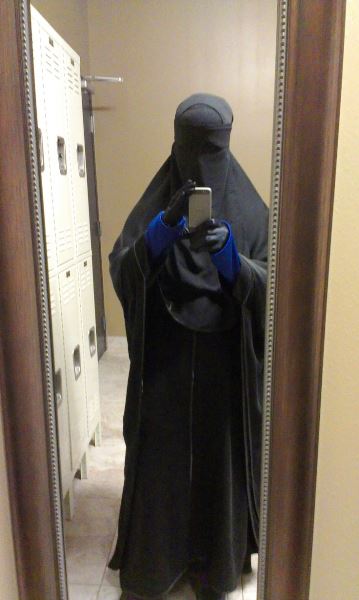
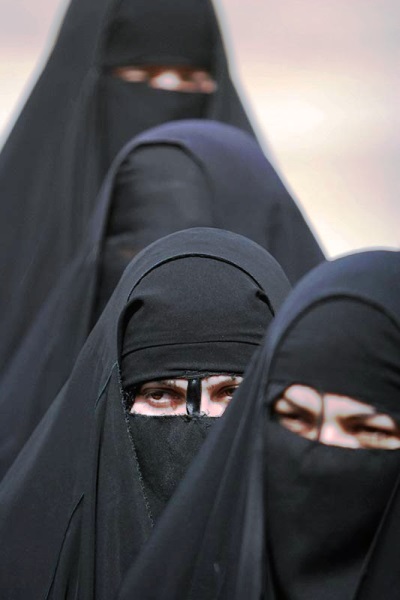
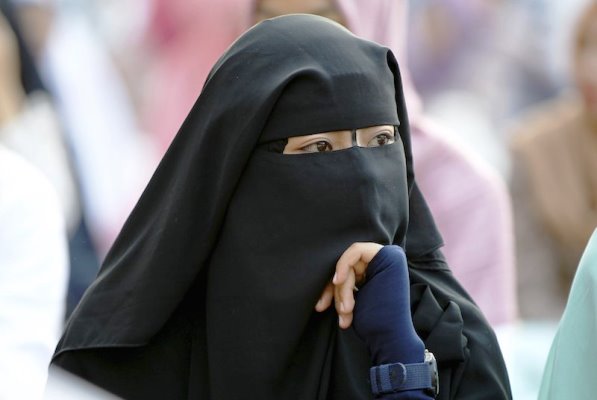
Recently, I came across a meme that compared the full niqab with local cultural dresses, and it reminded me of our unfortunate transformation. Inspired by this meme, I�d like to take you through a pictorial guide across the world.

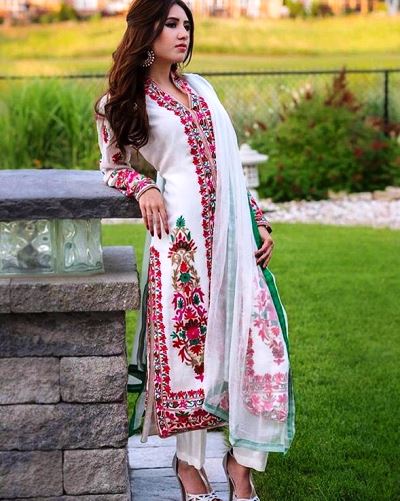
1. This is a traditional Pakistani dress:
Photo: Pinterest
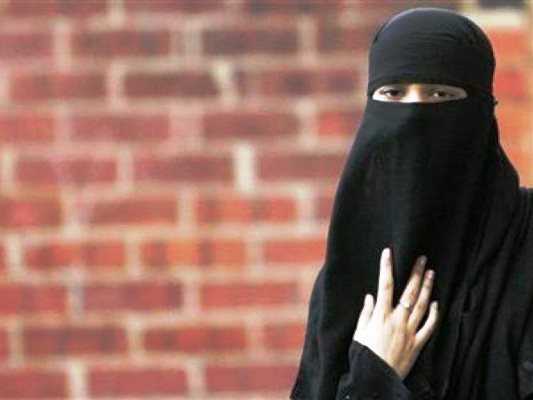
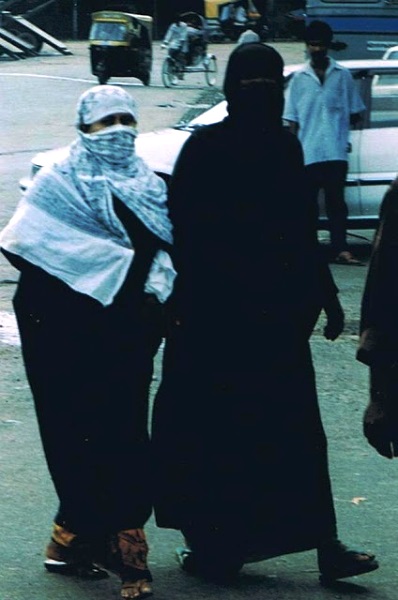
Not this:
Photo: Reuters
2. These are Bangladeshi dresses:
Photo: Pinterest
Not these:
Photo: Pinterest
3. These are Afghani dresses:
Photo: Pinterest
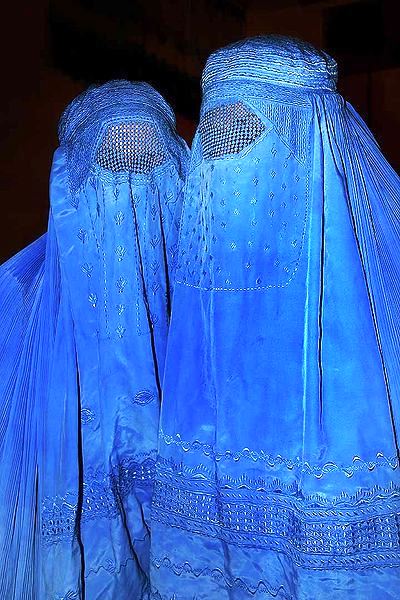
Not these:
Photo: Pinterest
5. This is an Indian dress:
Photo: Pinterest
Not this:
Photo: Pinterest
6. These are Iranian dresses:
Photo: Pinterest
Not these:
Photo: Pinterest
7. This is a Malaysian dress:
Photo: Pinterest
Not this:
Photo: Reuters
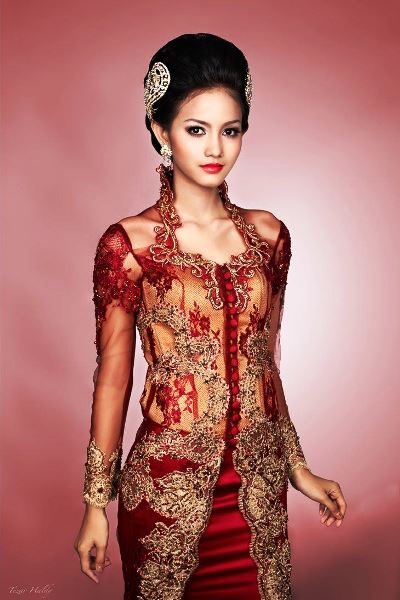
8. This is an Indonesian dress:
Photo: Pinterest
Not this:
Photo: Pinterest
9. This is an Iraqi dress:
Photo: Pinterest
Not this:
Photo: Pinterest
10. This is a Syrian dress:
Photo: Pinterest
Not this:
Photo: Pinterest
11. This is a Moroccan dress:
Photo: Pinterest
Not this:
Photo: Reuters
12. This is a Tunisian dress:
Photo: Pinterest
Not this:
 
Photo: AP
On one end we have colourful examples of cultural diversity, and on the other we have a misogynistic garb that seeks to paint women of the entire planet in a single colour. What does the world need more?


Noman Ansari

Noman Ansari

A freelance writer and regular contributor to The Express Tribune magazine and newspaper, Noman tweets as @Pugnate (twitter.com/Pugnate)

Monday, 16 March 2015

Islam and Feminism: through the lens of modesty

1 Comment


Another feminist argument is that Islam objectifies women by comparing them to flowers and pearls, as objects of beauty. This sort of analogy is often used by rape apologists to blame the victim. For example, in the recent documentary �India�s Daughter� about the gang rape of medical student Jyoti Singh, one of the defence lawyers argued that, �A female is just like a flower�if you put that flower in a gutter, it is spoilt; if you put that flower in a temple, it will be worshipped�.  However, the first part of the statement must be separated from the second part, which is an assumed logical conclusion according to the lawyer. Nowhere in Islam has it been said that a woman who does not dress modestly deserves to be raped, or that it is a natural consequence of her being dressed that way. The analogy to pearls and flowers in Islam is not a devaluation of women to mere beautiful objects; rather it is a statement of their intrinsic spiritual beauty and value in God�s eyes. Thus, any sort of victim blaming or shaming in rape is not an Islamic attitude, but a cultural attitude that can still be seen in some religious communities.

Modesty is a key value within Islam, and cannot be separated from its teachings. I have deliberately avoided using the word hijab for modesty, because it has become synonymous with the headscarf, and the head scarf has become much more about our identity as Muslim women rather than the value of modesty. Hijab is a philosophy of life that applies to both men and women, and without this understanding, the headscarf remains an accessory to complement an outfit, rather than an expression of modesty and devotion to God. When it is attacked as oppressive by secular feminists, we cannot just defend it as a matter of Muslim identity or a violation of civil liberties, but as a manifestation of this core value of Islam: modesty.

Monday, 17 November 2014

Veiled Frenchwomen Tell 5 Stories of Harassment

0 Comments

 women in headscarves

 Separated from Other Students

Sirine Ben Yahiaten, 17, has been wearing the veil since she was 14. From December 2011 through May 2012, she says she was harassed by the head of her school as well as other staff members who wanted her to stop wearing wide hair bands and long skirts. Eventually Ben Yahiaten left to complete her education at another school.
It was the month of December and it was cold. I had a long skirt and sweatpants underneath. I was wearing a wide hair band on my head. One of the teachers called me upon my hair band and asked me to remove it. I didn't understand why. He told me that it was an ostentatious sign. There was nothing of ostentatious in my opinion. He asked me three times to remove it. I kept refusing. He then took to me the office of the principal. While waiting for the principal, her secretary told me that I should not be wearing a pair of sweatpants under my skirt because there was a law that bans such dress code. The truth is that there is no law. I tried to explain that the weather warrants my choice of dressing... The principal didn't show up so I was sent back. But on my way back to class, I was asked to return to the principal's office. She told me that my skirt was too long and students walking behind me could fall because of its length, so she said that I was posing a threat to the security of the students. As for the headband, she said it prevents me from hearing well during the class. After that episode, I was sent to study period class everyday until I would agree to take off my hair band and long skirt. Every time I entered the school, someone was waiting for me to accompany me to the study period class since I was no longer allowed to have any contact with other students. I was not allowed to go out during class breaks. I was given exercises to do but I was never given makeup material for the courses that I had been missing.

Full article

Tuesday, 4 November 2014

French Muslims Confront Menace Beneath Ban of Veil

0 Comments

 Woman in hijab on roof
Chatar, 40, who spoke with Women's eNews in a phone interview in September, lives in the small village of Meru, in the Picardie region of France, with her three children and husband. But her fear isn't that of a small-town person in a big metropolis. It's due to her custom of covering her hair with a hijab, part of her way of practicing her Muslim faith.
In her town, Chatar feels that her neighbors both know and accept her. But the stories of Muslim women in big cities getting singled out for hate crimes scare her.
Workers at the Paris Opera recently drew international headlines by ejecting a woman wearing a full face veil, or niqab, which Paris outlawed in 2011. But Chatar's fears are not about the niqab, which she doesn't wear. All she wears is a head covering.
France began frowning on women in hijab in 2004 when the Parliament passed a ban on the display of religious signs in public schools, which meant schoolgirls could not wear the hijab. In 2012, a similar government rule extended to thousands of older women such as Chatar, forbidding them from escorting their children on school outings.
Both bans apply to school settings but for many Muslim women in France today the rulings reach much further, creating a pervasive sense of social prohibition about wearing the hijab that they break at their own risk.
Out of 1,417 Muslims interviewed last year, 2 percent � 30 individuals --reported a physical aggression, found a June 2014 study conducted by the Paris-based Collective Against Islamophobia in France. Women were almost all--97 percent--of those 30 victims.
Elsa Ray, spokesperson for the Collective Against Islamophobia, said street aggressions have been more violent in recent years. In the past veiled women were mainly targets of verbal violence, but the aggression has become more physical.
"The majority of aggressors are men and we have noticed that some women physically attacked were subjected to sexual touching while they had their clothes ripped off. These are signs of male domination," Ray said in an interview at the collective's office.
Last year, a 16-year-old Muslim woman recounted being attacked by two men in a Paris suburb in a piecepublished by the Huffington Post. "Then, he grabbed my arms trying to push me to the ground and he started to press his body against mine while he was holding my head. At that moment, the first guy started to touch my breasts. Then, he took a sharp object and started to scar my face with short and quick movements while the second guy was pressing his body against mine and he was blocking my head," the victim, named Aissetou, wrote.

Thursday, 20 February 2014

MUSLIMS, OUR NATURAL ALLIES

0 Comments


I am a Catholic. My Church teaches me to esteem our Muslim friends and to work with them in the cause of promoting justice and moral values. I am happy to stand with them in defense of what is right and good. And so I stand with the young woman in the above video in defense of modesty, chastity, and piety, just as I stand with Muslims like my dear friends Shaykh Hamza Yusuf and Dr. Suzy Ismail against the killing of unborn children and the evil of pornography, and with my equally dear friend Asma Uddin of the Becket Fund in defense of religious freedom. In the great document Nostra Aetate, we Catholics are taught the following by the fathers of the Second Vatican Council:


The Church has also a high regard for the Muslims. They worship God, who is one, living and subsistent, merciful and almighty, the Creator of heaven and earth, who has also spoken to men. They strive to submit themselves without reserve to the decrees of God, just as Abraham submitted himself to God�s plan, to whose faith Muslims link their own. Although not acknowledging Jesus as God, they revere him as a prophet; his virgin Mother they also honor, and even at times devoutly invoke. Further, they await the Day of Judgment and the reward of God following the resurrection of the dead. For this reason they highly esteem an upright life and worship God, especially by way of prayer, almsgiving, and fasting.

Over the centuries many quarrels and dissensions have arisen between Christians and Muslims. The sacred Council now pleads with all to forget the past, and urges that a sincere effort be made to achieve mutual understanding; for the benefit of all men, let them together preserve and promote peace, liberty, social justice and moral values.

Let us heed this teaching. Let us, Muslims and Christians alike, forget past quarrels and stand together for righteousness, justice, and the dignity of all. Let those of us who are Christians reject the untrue and unjust identification of all Muslims with those evildoers who commit acts of terror and murder in the name of Islam. Let us be mindful that it is not our Muslim fellow citizens who have undermined public morality, assaulted our religious liberty, and attempted to force us to comply with their ideology on pain of being reduced to the status of second-class citizens. Let all of us�Christians, Jews, Muslims, and people of other faiths who �esteem an upright life� and seek truly to honor God and do His will�embrace each other, seeking �mutual understanding for the benefit of all men [and working] together to preserve and promote peace, liberty, justice, and moral values.�
Through the great work being done by my friend Jennifer Bryson�who is a devout Christian and a great American patriot who spent two years as an interrogator at Guantanamo�I have met hundreds of religiously observant Muslims over the past several years and many are now my close friends. They are among the finest people I know. Like faithful Christians and Jews, they seek to honor God and do His will. They work, as we do, to inculcate in their children the virtues of honesty, integrity, self-respect and respect for others, hard work, courage, modesty, chastity, and self-control. They do not want to send their sons off to wars. They do not want their children to be suicide bombers. They do not want to impose Islam on those who do not freely embrace it. They thank God for the freedom they enjoy in the United States and they are well aware of its absence in the homelands of many of those who are immigrants. It is not right for us to make them feel unwelcome or to suggest that their faith disables them from being loyal Americans. It is unjust to stir up fear that they seek to take away our rights or to make them afraid that we seek to take away theirs. And it is foolish to drive them into the arms of the political left when their piety and moral convictions make them natural allies of social conservatives. (A majority of American Muslims voted for George W. Bush in the 2000 election. A majority of the general voting population did not.)
I admire Muslim women and all women who practice the virtue of modesty, whether they choose to cover their hair or not. There are many ways to honor modesty and practices vary culturally in perfectly legitimate ways. Men and women are called to serve each other in various ways, and women who refuse to pornify themselves, especially in the face of strong cultural pressures and incentives to do so, honor themselves and others of their sex while also honoring those of us of the opposite sex. They uphold their own dignity and the dignity of their fellow human beings, male and female alike.

I have no doubt that in certain cultures, including some Muslim cultures, the covering of women is taken to an extreme and reflects a very real subjugation, just as in sectors of western culture, the objectification of women (including the sexualization of children at younger and younger ages) by cultural pressures to pornify reflects a very real (though less direct and obvious) subjugation. But, of course, we are in the happy position of not having to choose between the ideology of the Ayatollah Ruhollah Khomeini and that of Hugh Hefner.

Of course, defenders of pornification claim that they are �liberating women� and �celebrating female beauty.� The liberation claim is the very reverse of the truth. As for �celebrating female beauty,� let me ask you this: Is there an actress in all of Hollywood who when appearing at one of these absurd awards shows dressed in a see-through gown, bra-less and wearing a thong, can compare with the beautiful young Muslim woman in the video I posted? I submit that there is none. Oh, yes, to be sure, the actress will appeal to something in her male viewers. (I�m a man.Take it from me.) But it will not be their sense or appreciation of beauty. It will be something much lower and brutely appetitive. Their experience will be one in which who she actually is as a person is utterly submerged. The men viewing her will not be drawn in to wonder about her thoughts and feelings, her experiences of joy and sorrow, her strengths and vulnerabilities�the things that actually make her the unique person she is. Their experience will, quite literally, be an experience of de-personalized desire�the very definition of lust.

Source

Friday, 13 December 2013

Monday, 9 December 2013

Somewhere In America #MIPSTERZ

0 Comments

Have you ever seen a Muslim woman skateboarding with heels? A Muslim veiled woman fencing at Olympics level? A veiled woman performing handstands, or juggling in the street?
Well you might see me doing one of those things if you check out a two-and-a-half minute video shot by two Brooklyn-based friends, Habib Yazdi and Abbas Rattani.
The video features a dozen Muslim women; all of us veiled, dressed modestly but wearing the latest trends. Our hair is partially covered, totally covered, or sometimes wrapped in a turban. Mixed with the Jay-Z's "Somewhere in America" soundtrack, the video offers an antidote to prevailing western stereotypes of Muslim, veiled women as inactive, passive, uniform in their appearance, and hidden.
Shot in five cities--New York, Los Angeles, Boston, Washington, D.C., and Hillsborough, S.C.--the mission of the video is to project a positive, rarely seen image of veiled Muslim women living IN the West. A year after participating in the video, I am pleasantly surprised to find it doing just that, offering an image that is both joyful and realistic.
Released on Nov. 30 the video is rapidly attracting viewers on Youtube and being heavily shared on Facebook and other websites. It was removed from Vimeo on Dec. 3 for copyright infringement involving the soundtrack, but had amassed 70,000 views within three days of being made public.
I took part in that project as a model for the New York-based Underwraps agency. We shot in a cold Saturday afternoon in December 2012 in Prospect Park, Brooklyn, with two others models and the head of the agency, Nailah Lymus.
From climbing on trees to scaling to the top of shipping containers to performing stunts, the intense activity on that shoot made us almost forget the biting cold.
Habib Yazdi directed us with the help of a producer named Sara Aghajanian. They said they wanted to project an image of strong and confident veiled Muslim women. They wanted something that mainstream media has never showed. The one and only rule they gave us was "Be yourself and have fun!"
A few days ago, I sat with Yazdi, a 27-year-old American Muslim of Iranian heritage, at a diner in Manhattan and learned more about what the project meant to him. Born and raised in Texas, he said he was ridiculed and taunted in high school for having a mother who wore the hijab.
"It was always on my mind, 'why is it ridiculed that my mom dresses like this?' And 'why is it seen as something lesser or inferior to other women?' I think that kinda stayed with me for a long time," Yazdi said.

Finding Fashion in Iran

After being teased in the United States by those who had no understanding of the veil that his mother was wearing, Yazdi remembered being pleasantly surprised when he encountered Iranian women wearing the veil in a country where it is mandatory.
"I saw a lot of young women who were forced to wear the scarf but they do it in such a fashionable way such as it defied the whole meaning behind why you are supposed to wear it. I was really taken by their strong sense of fashion there and how they use these restrictions imposed by the government to rebel within these restrictions," he said.
Yazdi has not showed the video to his mother yet but he's sure she will like it.
With its lack of narration, its trendy look and dynamic hip hop soundtrack, Yazdi and Rattani adopt a commercial approach meant to popularize the image of veiled Muslim women as "bold, powerful, young, rebellious, and fashionable women," Yazdi said. "We want to give people a different experience of what they tend to see and hear about Muslim women. You see how easy it is to manipulate images to create an idea, so for us it was like, why don't we do the same thing? Why don't we do our commercial and manipulate the images in our favor?"
If this kind of media were more widespread, the director thinks it could help change perceptions about Islam and women.
"Imagine if these images of Muslin women we have in the video are more prevalent, it becomes cool, it becomes hip, it becomes something that you are exposed to," said Yazdi. "If you see this and it is presented in such a fun and cool capacity, everyone is going to respond to that."

A Realistic Depiction

I can't speak out enough about the importance I see of this effort. The woman that I am in that video--doing a handstand among other things--is the woman that I am every day. In addition to my commitment to journalism, I am a very active woman. I'm into sports. I love being creative through fashion. Today I no longer wear the hijab but I covered my hair for nearly two years. During that time--as in none other--I found I had to show and prove that I was not inferior.
I decided to remove the veil just a few weeks before the Underwraps Agency put me on the set for this shooting, with my hair wrapped in a black turban.
People unfamiliar with Islam often assume a woman cannot workout, cannot play sports, cannot go out on her own, must be accompanied by a male relative, and so forth. In some parts of the world--such as Saudi Arabia--these restrictions might apply. For most of us, fortunately, they do not.
To combat the reductive stereotypes, we need more media that reflects our multi-faceted identities as Muslim women. It might not be every day that you witness veiled Muslim women wearing heels and skateboarding. But if you are ready to perceive us, you will come across plenty of active, funky, joyful, confident Muslim women who are also wearing the veil.
Each model in the video offers strong examples of what it means to be Muslim woman in America. There's Marwa Atik, co-founder and designer of Vela, a Los-Angeles based hijab company; Ibtihaj Muhammad, the American Olympic fencer; and Noor Tagoori, a young CBS radio journalist whose dream is to become the first Hijabi anchorwoman or talk show host on American television.
Jay-Z's song "Somewhere in America" has roused some controversy online because of two curse words in the track. Yazdi and Rattani have since released another video with a sanitized version of the song.
Otherwise, the music is essential to the message of "all things being possible in America," Yazdi said. "It is almost a shout out to say okay there are some good things here. As much as this country is to blame for the images that were very harmful for Muslim women, it is still a place where you can dress like this, act like this and be like this."
I strongly share that view. When I decided to wear the hijab, I felt comfortable doing so because I was living in the United States where freedom of belief really does seem to exist. As a French citizen, I was never AS uncomfortable as when I traveled home with my hair covered. Wearing hijab is not allowed in school and public jobs in France and covering your hair is often perceived as a lack of social integration. In the United States, by contrast, it can be a way to follow the director's orders and "be myself and have fun."

Monday, 21 October 2013

Rihanna in another outrage: And this time she's fully clothed.... at UAE's Sheikh Zayed Grand Mosque

0 Comments


She�s used to causing controversy with her racy music videos, but even dressed head-to-toe in a hooded black jumpsuit Rihanna has managed to provoke outrage.
The 25-year-old "Diamonds" singer posted images on her Instagram account showing her posing at the Sheikh Zayed Grand Mosque in UAE, where she is currently on tour.
Despite a very conscious effort to tone down her usual attention-grabbing-garb, she is seen sporting crimson lipstick and wearing dark red fingernails while adopting a series of trademark sultry, pouting poses that some have deemed "disrespectful" for a place of worship. Her followers on Twitter couldn't decide whether to condemn the pictures or enjoy them.
�Rihanna may look gorgeous and all but she�s covering her head out of fashion not out of respect for the mosque,� wrote one user.
Another person responded to the images writing: �I don�t see how Rihanna posing adjacent to a mosque in Abu Dhabi is disrespectful.
"If anything she�s showing respect by supporting the hijab.�

Source

I'm not outraged in the least I think she showed respect by wearing hijab  at a mosque and her poses were not sexual. She looks really classy and I think she has shown women look chic in hijab not ugly like so many anti-hijab people claim. I also think women shouldn't have to listen to anything men say about hijab. They can think and choose for themselves inshaAllah.

Wednesday, 21 August 2013

 
back to top