Tuesday, 5 April 2016

Role of Majority Muslims to Combat Terrorism

0 Comments
Role of Muslim Majority - WorldMuslimCongress.Com
There is a couplet in Urdu language, which roughly translates into, whatever you want to do, go ahead and start, as you march forward, people will join you in the movement and bring the needed change.  Dr. Basheer Ahmed is that lone ranger, he started the Muslim Community Center for Social Services some 20 years ago, he struggled with it, but within a few years of hard work, commitment and dedication, it has become an important institution in Texas. You have to read about it at: http://mcc-hs.org/ Dr. Basheer Ahmed, has undertaken another initiative to nurture goodwill among Muslims of different backgrounds at Iqra.

Mike Ghouse
World Muslim Congress
# # #

Role of Majority Muslims to Combat Terrorism 

This is no longer news that the Muslim Terrorists are creating havoc by indiscriminate killing of innocent Muslims and Non-Muslims all over the world. It is just a matter of where and when?  It is followed by media frenzy.   Then interfaith groups convene. Sometimes I am summoned to speak to such peace loving groups about Islam. I try to emphasize that Islam promotes justice, equality, peace and harmony in the world and that these attacks are not representative of the followers of Islam. A more complex discussion evolves in trying to understand or explain the recurring attacks, and how to stop them.

In my humble opinion, one of those factors is:

1)  The Current Role And Image Of US And Western Countries In The Mideast.

The Muslim resentment of the United States and the Western countries and visive has peaked in recent years.  As a Muslim American, I find it alarming.

If I may, the ground reality is the immense atrocities of wars we spearheaded in the Muslim world. Half baked and mind boggling snippets of information fed through the media and other social outlets fanned hate and anger among Muslims. It is being attributed to the foreign policies of the western countries, especially the United States. For that, the United States has been losing its popularity and respect in the Middle East and South Asia since late 1960s. It was mainly due to its perceived policy of �20th century colonialism." Here in the United States, our words of promoting human values, dignity to human life, justice and equality do not match our politically correct behavior abroad.

The US foreign policy in the Middle East does not have any significant effect on ordinary US citizens. Here, all of us rejoice the freedom of speech, economic stability, law and order, and an equal opportunity to actualize our dreams. However, there are people here who clearly see the negative consequences of these US policies in the Middle East and other Muslim Countries. They are not afraid to point out that these policies are created purely to expedite Armageddon and for economic gains in the United States and Europe at the expense of the Muslim citizens in the Middle East, and they are not hesitant to call the US �the most terrorist country in the World� (https://www.rt.com/usa/202223-noam-chomsky-global-terro).

The illegal invasion of Iraq by the United States led to the deaths of at least one million people, destabilized the entire region, and created extreme conditions in which militant groups like al-Qaeda spread like a virus, eventually leading to the current era of ISIS. . (Dahr Jamail  �Report Shows US Invasion, Occupation of Iraq Left 1 Million Dead�, Truthout | Report)


During the Iraq war and thereafter, innocent people were not only rounded-up, tortured and imprisoned; hundreds of thousands were also killed. Lots of photos were posted on-line. The Abu ghuraib photo-reports were much too much even for the members of congress. These actions created tremendous hate and anger among Muslims in Middle East against the United States.

The disastrous NATO intervention in Libya destroyed the infrastructure, turning the country into a hotbed for extremism and allowing militant groups like ISIS to spread west into North Africa. Thousands of Libyans were killed, and hundreds of thousands became refugees.

Until very recently, Obama government was being pressured to bomb Iran for the same reason Bush attacked Iraq. If Iran were attacked, the US would have been responsible for the creation of another vintage of ISIS, worse than the Iraqi ISIS.

There may not be a peace in Middle East until Western powers leave the area and stop installing regimes for their personal short term economic gains.

In the midst of a multitude of terrorist groups, we seem to have overlooked the real problem. Bypassing, circumventing, avoiding or just out right partiality has now unfortunately left with only one solution. That is, a complete withdrawal by the West from any involvement in Middle East affairs. There is no doubt that more people will die. It will still be much less than that being caused now by the indiscriminate bombardment of the region being shelved by the West, including Russia. If western countries would just leave, and stop arming the �favorite� Muslims, the fuel and the oxygen for this firework would be gone. Unfortunately, the greed, the desire to control a people and continue to exert remains far too tempting for the powerful and the mighty. These factors are ever so vivid to any Middle-Easterner lay man. And this begs a question -
�Are these factors not enough for Muslims in Middle East to show resentment, anger, hatred and revenge towards US and their allies, including Russia? 

2) RESPONSIILITIES OF MUSLIMS

The ensuing anarchy in Muslims lands has also given rise to heart wrenching events. The bombing of a mosque in Iraq killing hundreds of people who were performing Juma prayer on the first day of Ramadhan-a very sacred day for the Muslims. One hundred and fifty (150) Muslim children are killed in Pakistan by Muslim terrorists without any mercy, 300 school girls kidnapped and taken away from the families in Nigeria, Muslim terrorists shoot a group of Ismaili Muslims in a bus in Pakistan, and people are picked out from a bus and killed because they were Shias. All this is being done under the name of Islam. What a merciful Islamic behavior demonstrated by Muslims upholding the good name of Islam (A Peaceful Religion).

Muslim Terrorists are operating under different names and different motives. Taliban, Al-Qaeda, Booko Haram, Al-Shahab, and hundreds of other groups are promoting violence in the name of Islam. Now, ISIS established a Muslim Khilafath and is promoting a more severe and brutal regime.

After these Muslim terrorists kill innocent people in the name of religion, the �moderate� Muslims, and even countries, typically react by issuing press releases and edicts (Fatwa) condemning the terrorists� acts and apologizing for their behavior by labeling them un-Islamic and deviant. These press releases and Fatwa had no effect on terrorists.

Every time the media broadcasts Muslim terrorist acts, we accuse them of Islamophobia. We Muslims immediately give the statistic that 90% of the terrorist attacks are committed by Non- Muslim, though correct. Yet, fact remains, none of these terrorist acts are committed under the name of the religion. (I admit there are incidences like bombing of the abortion clinics, but they are extremely few, isolated and duly addressed...) Our denial will retain status quo.

What is the Solution?

The majority of the victims of Islamic terrorism are Muslims, and the majority of Muslims regard the terrorist�s activities as unislamic. However Muslims must take responsibility to control terrorism in the name of Islam.  Muslims need to stop sectarian violence and the spread the jihadi Wahhabi ideology resulting in death of thousands of Muslim throughout the world. If the majority of Muslims (95%) take this challenge, then terrorism can be controlled. By not taking any action, we are giving sanctions for terrorism. There is not necessarily a need for a complete reformation of Islamic faith, but Muslims do need to consider some reformation of radical Islamic ideology and reflect on the true Islamic spirit. Moderate Muslims must spread the correct message of Islam by refuting the Jihadi ideology.

Faith is a matter of relationship between God and human beings. The reformation of Muslims ideology is only possible through education, logic, and critical thinking. As long as some dominating groups try to impose their rigid and sometime illogical ideas in the name of religion, we cannot bring any change in the ideology. Mandating one interpretation of the Quranic message is not desirable and should be replaced with interpretations according to the needs of the time.

No matter whatever the underlying factors are. TERRORISM is not the answer as it will cause more death and destruction, and it is not a rational approach to the solution.

Therein lays a unique opportunity of historical proportion for Muslims. Along with millions of other peace loving American Citizens � across the board � we can work together to find a peaceful solution - towards national and international harmony.
Dr Basheer Ahmed is the chairman emeritus Muslim community center for human services Dallas TX. He can be reached at     mbahmed05@ yahoo.com

Sectarian Violence and Role of Muslim Ummah

0 Comments
Sectarian Violence | WorldMuslimCongress.com 
Link: http://worldmuslimcongress.blogspot.com/2016/04/sectarian-violence-and-role-of-muslim.html


Dr. M. Basheer Ahmed

Today the Muslim community is plagued by sectarianism. The majority of murdered Muslims were killed by other Muslims in the name of Islam. The ongoing civil war in Syria is an aggravated version of sectarian violence that has resulted in the death of thousands of people and millions of displaced Muslims, both Sunni and Shi�a. They are now refugees seeking asylum throughout the world. This sectarian dispute has led to the most massive international humanitarian crisis that the world has ever seen. How can anyone expect anybody to believe that Islam is the religion of peace? Because of this crisis, Islam is losing respect and credibility in the world.

The threat of this Islamic divide has now led to escalating violence and the loss of peace and security of many Muslims and the world beyond. The holy Quran stresses the unity of humanity generally on the basis that all human beings are the creatures of God. The holy Quran tells the prophet (pbuh) not to be associated with the beliefs of those who nurture sectarian beliefs and discard such persons or ideas. The Quran says: �Indeed, those who have divided their religion and become sects - you, [O Muhammad], are not [associated] with them in anything. Their affair is only [left] to Allah; then He will inform them about what they used to do.�(Al An �am: 159) Muslims have turned the entire Islamic world into a tribal society of the seventh century where warfare and bloodshed were understood to be the only solution of all the problems.

 It is impossible to get an entire community of 1.6 billion Muslims to think alike on all issues, but it is possible to have the coexistence of people with different beliefs to live in civilized communities in the world. The major challenge is to persuade people to stop killing one another because they have different interpretations of events in history that took place 1500 yrs ago. We should be cognizant of happenings, changes and challenges in our world, and specifically in today�s Muslim world. We should learn from the experiences of our Christian brothers who faced similar sectarian induced atrocities until a few hundred years ago. We know the Middle East�s rulers are not making things any better. They are not interested in any effort to close the divide. In fact, they are the ones solely responsible for the surge in sectarian violence.

Fortunately, we are not seeing a surge of Sectarianism in the United States. However, this menace is spreading into Europe and the rest of the world. Today, the media has a great influence on people. Young Muslims are learning more about Islam from the media, and unfortunately our Imams are not addressing this issue of Sectarianism and the violence affecting the Muslim communities. The silence of community leaders on the dangers of sectarianism and the resulting death and destruction in our birth countries is deafening. It should be our common cause of concern. It is difficult to accept that sectarianism within our own faith exists. And it is even more difficult to convince people that someone from another school of thought is still our equal in faith.
We should be proactive. We should not wait until our youth become fanatics.  We must ignore the political events which led to these conflicts. We must teach our children to develop harmonious relationships and to give dignity and respect to each other. We must accept responsibility to stop this bloodshed and promote peace among Muslims so that they are better equipped to cope with even the biggest menace -ISLAMOPHOBIA.

The Muslim world is in disarray and in a human crisis stage. Still, this is not the time to engage in blame games or focus on sectarian differences.  We simply cannot afford to ignore the severity of the current state of affairs. Today, it is imperative that we build bridges.  Despite all of our differences and divides, we should respect and tolerate one another. All of us have a responsibility to reject extremist interpretations and its associated political agenda. This is the challenge we need to face and be ready to take action.
�Verily never will God change the condition of people until they change it themselves� Qur�an 13:11

As we mentioned above, the critics of Islam point out that the most violence, the most killings, the most bombings, and an overall lack of peace is in Muslim countries. Even though Muslims vehemently insist that Islam is a religion of peace, we know that these violent practices are contrary to the teachings of Islam. But publicly it is impossible to equate Islam with peace when the very countries that are supposedly practicing Islam have this level of violence. It is therefore incumbent upon Muslim leaders to do what they can locally while thinking globally to ensure that, at least within our own circles, we unite to counter this violence, making it a model for other communities and the countries to follow suit.

We established an Organization Institute of Quranic Knowledge and inter/intrafaith Religious Acceptance(IQRA) to start a dialogue with community leaders of the Islamic faith, irrespective of their being Sunni or Shia or any other minority sect. The purpose of these dialogues is not theological debate; rather, it is a discussion of how as leaders we can relay to our followers that violence between the sects is counter-productive for all involved. Once we have created this model, we can only hope that others will replicate it on a global level.

If you believe the Mission of this Organization please join us in our efforts. For further information please contact Basheer Ahmed, M.D. at mbahmed05@yahoo.com

_______________________________________________________
M. Basheer Ahmed, M.D.
CHAIRMAN EMERITUS, MCC for Human Services

Education, Research and Service to the Humanity is the Greatest Worship

Sunday, 3 April 2016

TrueCrypt+ISIS

0 Comments
Evan Ratliff, New Yorker, The strange origins of TrueCrypt, ISIS�s favored encryption tool "When one would-be bomber was dispatched from Syria to France, Callimachi writes, �an Islamic State computer specialist handed him a USB key. It contained CCleaner, a program used to erase a user�s online history on a given computer, as well as TrueCrypt, an encryption program that was widely available at

Taliban app

0 Comments
bloomberg.com, Taliban Develop Smartphone App to Advance Propaganda Efforts, 2 April 2016 "The Pashto language app includes content such as official statements and videos from the Taliban, which has sought insurgency in the country for more than 14 years since it was ousted in 2001 with help from the U.S. The app appeared on Google�s Play Store until Saturday, when it was removed to fix some "

Saturday, 2 April 2016

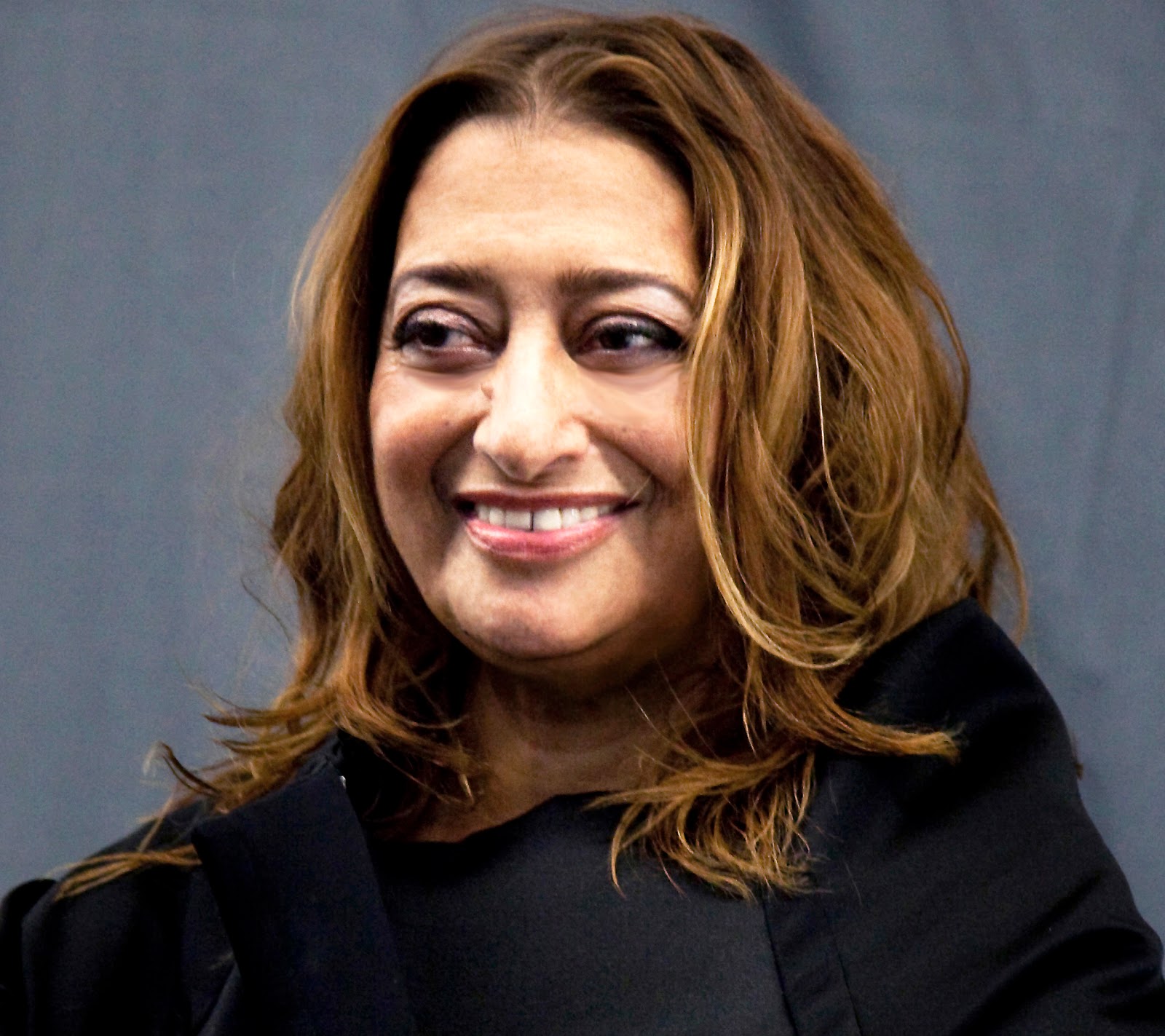
Zaha Hadid - A Muslim woman on top of the world

0 Comments
 A Muslim woman on top of the world
We need more Icons like her, she has designed amazing buildings in China, Italy, Germany, UK and everywhere in the world including the U S of A.


Her Buildings : https://media.giphy.com/media/xThuW5ovZwcdVCl38I/giphy.gif 
Dame Zaha Mohammad Hadid, DBE was an Iraqi-born British architect. She was the first woman and the first Muslim to receive the Pritzker Architecture Prize, winning it in 2004. She received the Stirling Prize in 2010 and 2011. Wikipedia
Born: October 31, 1950, Baghdad, Iraq
Died: March 31, 2016, Miami, FL
Here is the full story at Slate with pictures of her incredible buildings.

Sunni Muslim, is that who I am?

0 Comments
Farrukh wrote, �This is a warning to all Muslims in this forum that Mike Ghouse�s religion is not Islam, he is Ismaili, and he is misguided person. If anyone needs more info about his religion, please let me know.�  
Really?
There are a few out there who do not even have the inclination to verify any information but pass it on as their authoritative information.   I wish he had written, �Mike Ghouse is a Muslim, and I am not sure which denomination he belongs to as I have not verified it,  but it appears that he fits in with everyone from Shia, Sunni, Bohra, Ahmadiyya, Ismaili, Alawite or what not.� And, �If anyone wants/need more information about his religion, visit the following sites.
Am-I-a-Sunni-Muslim www.MuslimSpeaker.comwww.WorldMuslimCongress.com ,www.QuraanToday.com,www.QuraanConference.com ,www.RamadanExclusive.com , www.ShariaLaws.com, and a whole lot more sites including www.TheGhousediary.com and the following video at Youtube; https://www.youtube.com/watch?v=oZQ-FT8GfiQ

First of all, Prophet Muhammad knew only one group of people; Muslims! Prefixes like Sunni, Shia, Ahmadiyya, Bohra, Ismaili, WD Muhammad, Alawite, Deobandi, Barelvi, Ahl-e-Hadith, Ahl-e-bait etc., were not in his vocabulary nor can anyone ascribe these words to him � he did not use them.  
Secondly,  
All the Madhabs or denominations are natural outcomes of the society. Prophet Muhammad (pbuh) understood human nature and rightfully predicted the singular faith he taught will split, re-split and will continue to split and he chose the metaphorical number 72 do denote an infinite number.
He planted that seed, so we can learn to live with each other with our differences, we have to race in doing good things but not claim to be self righteousness and denigrate others, as that amounts to arrogance and God does not like those who are arrogant.  Only God knows who would be rank #1, #2, and #3,  and who would score A, B, C or D grades. Even if you are a sinner,  God may forgive you if you do one simple act of kindness towards other living beings like giving water to a thirsty cat, but most certainly fellow humans. Only God knows the full impact of our actions to his creation to bestow his grace.
My understanding is, you have to be a good human being who cares for his fellow beings and environment (that God has created). Wont� you be happy and sing songs of your guests in your home if they meticulously take care of your property?  Or your employees who make sure your business is intact and taken care of?  Do you worry if the employee is Jewish, Hindu, Muslim, Christian or whoever, as long as he or she cares for your business? God does not worry how you worship him or what your religion is,  he appreciates it if you contribute towards preserving his creation,  and it comes through justness, fairness and kindness.
God does not discriminate one from the other, his criteria or question to us is, �Are you good to your fellow beings (humans and animals) and environment?�
[2:136] Say, �We believe in GOD, and in what was sent down to us, and in what was sent down to Abraham, Ismail, Isaac, Jacob, and the Patriarchs; and in what was given to Moses and Jesus, and all the prophets from their Lord. We make no distinction among any of them. To Him alone we are submitters.�
[4:152] As for those who believe in GOD and His messengers, and make no distinction among them, He will grant them their recompense. GOD is Forgiver, Most Merciful.
God loves us all, after all we are his creation, and because he cares about us, he offers guidance, and he sends a peace maker (call a messenger, prophet or any other word) to each community and each group to show them how to live in peace and harmony. Bhagvad Gita phrases it in another fashion, every time there is chaos in the society, someone from among you will emerge to restore righteousness. It could be a Shaman in the remote jungles of Amazon or a Prophet like Abraham, make no distinction, they serve God by preserving harmony, peace and justice in the community they live in.
Islam has always emphasized on serving fellow beings, God assures every one, yes every one, not to worry about the future, as long as you take care of his creation comprising life and and matter, he will take care of you.
[2:62] Surely, those who believe, those who are Jewish, the Christians, and the converts; anyone who (1) believes in GOD, and (2) believes in the Last Day, and (3) leads a righteous life, will receive their recompense from their Lord. They have nothing to fear, nor will they grieve.
[22:17] Those who believe, those who are Jewish, the converts, the Christians, the Zoroastrians, and the idol worshipers, GOD is the One who will judge among them on the Day of Resurrection. GOD witnesses all things.
[43:17] He also said, he made us into many tribes, races, nations and by extension religions and communities and the best ones among us are those who learn about each other, and when we do that, conflicts fade and solutions emerge.
The division
Quran remains the word of God; however, what God meant has been understood differently by different people. No one, including the great Imams of the time can ever claim that his understanding is the right one.  Remember, Prophet Muhammad (pbuh) did not assign any one to be the sole interpreter of Quran, he said, I am leaving this book to you, for you to understand. Please note, the Shia tradition differs on this issue, and we have to respect their understanding. If God is kind, just, merciful and fair, and Prophet is a mercy to mankind, then everything we will see in Quran would be nothing but common sense for common goodness, it is non-stop universalism. You are welcome to differ, Islam is too big of a religion (aalameen) to exclude any one of us.  
In the beginning, there was one singular interpretation for Christianity, Judaism, Buddhism, Hinduism, Sikhism, Islam and other faiths for many years.
In the 16th century,  Christianity split into Protestant and its many variations, each faith has followed the same natural path of amoeba, divide itself and keep multiplying.
In case of Islam, Prophet Muhammad knew only one thing; what he preached; One Islam. He did not even know that there was a Sunni Islam. I would say the same about all other prophets.
Then we reluctantly accepted the split of Shia and Sunni traditions, then came the 6 six schools of thoughts, we accepted that diversity as well, and now Islam has many traditions within, and we have accepted them with humility. Pluralism is an attitude of respecting the otherness of others. 
Allahu Akbar! (Check out Huffington Post � http://www.huffingtonpost.com/mike-ghouse/allahu-akbar-abused_b_860221.html ) it means humility, we are small, hence all of us small ones are on par.  A few among us are arrogant about our traditions and denigrate others.  What a shame, they assign themselves to play the role of a deputy of God or decider for him and pass judgments about others. That is shirk (diluting the dominion of God)  and it creates problem hence declared as the ugliest of all sins. That is we cannot judge other�s faith.
I have chosen to remain denomination less, but if you want to know what I pray like and sound like, it is reflective of Sunni tradition, only because I was raised with those values and it don�t mean superior or inferior, it is just my tuning.  If my parents had programmed me to be a Shia or an Ahmadiyya, I would have followed that path. We need to learn to respect each path, each one means dearly to the believer, as they say, beauty is in the eyes of the beholder, faith is in the heart of the believer.  My mother is dear to me as your mother is dear to you and Quran says, to you is your faith and to me is my faith (109.6 � that is not a radio station, but the Verse from the Quran) .
Heavens, I am comfortable with every which tradition a Muslim prays and I have been to every Mosque of almost all denominations including the three most revered ones in Mecca, Madinah and Jerusalem. (Check out http://www.RamadanExclusive.com)  Ironically, it would have been abidda, an invention if someone had called himself or herself a Shia or a Sunni during the life of the Prophet.  So, why should I call myself a Sunni?  I fully respect other people�s choices to belong to sub-groups and all are welcome. I am a Muslim, period! I have no walls between me and another Muslim, and no wall between me and another human. 
Indeed, the World Muslim congress was formed with that express purpose to create space for every Muslim, and the www.FoundationforPluralism.com was created for all humanity.  In the search box, you can plug in the name of any denomination, and you will find the articles, you can plug in the name of any commemoration or festival, you will find the information. It took me a lot of time and effort to make that happen, and that is my commitment to create a world where all humanity can get along by knowing each other. 
The role of Muslims is to contribute towards the well being of humanity, and to be the conflict mitigaters and goodwill nurturers. Our goal is to build a secure world for every human, our Jewish friends can understand that, as they believe in Tikkun Olam. Please read the mission statementhttp://worldmuslimcongress.blogspot.com/2012/01/mission-of-world-muslim-congress.html
This group is about Muslims and their civic responsibilities in creating a dignified religious, social and civic space for themselves in the community of faiths. We do not distinguish between a Sunni, Shia, Ahmadiyya, WD Muhammad, Ismaili, Bohra or the subsets of each group, all believe in God, the Prophet and the accountability of their actions and whoever calls himself or herself a Muslim is a Muslim to us. Currently we are blessed to have our Christian, Hindu, Jewish, Baha�i, Sikh and Buddhist friends among us to learn and share their perspective. This is our world and our God collectively.
The  WorldMuslimCongress@yahoogroups.com with  1700 members from around the world, and it is denomination-less, it is for all Muslims with full and equal respect to all denominations.Our focus is not the tiny differences, but the larger commonality.
World Muslim Congress is a think tank, all are welcome to participate in the discussions, and our scope is limited and defined in our mission statement. Currently, we have 1700 Members worldwide with no membership fee.
To join the group that has been around since 2004, and prior to that it was called the Muslim Agenda from 2002 onwards, send an email to: WorldMuslimCongress-Subscribe@yahoogroups.com
Dr. Mike Ghouse is a community consultant, social scientist, thinker, writer, news maker,Interfaith Wedding officiant, and a speaker on PluralismInterfaithIslam,politicsterrorism,human rightsIndiaIsrael-Palestine, motivation, and foreign policy. He is committed to building cohesive societies and offers pluralistic solutions on issues of the day. Visit him (63 links) atwww.MikeGhouse.net andwww.TheGhousediary.com for his exclusive writings.

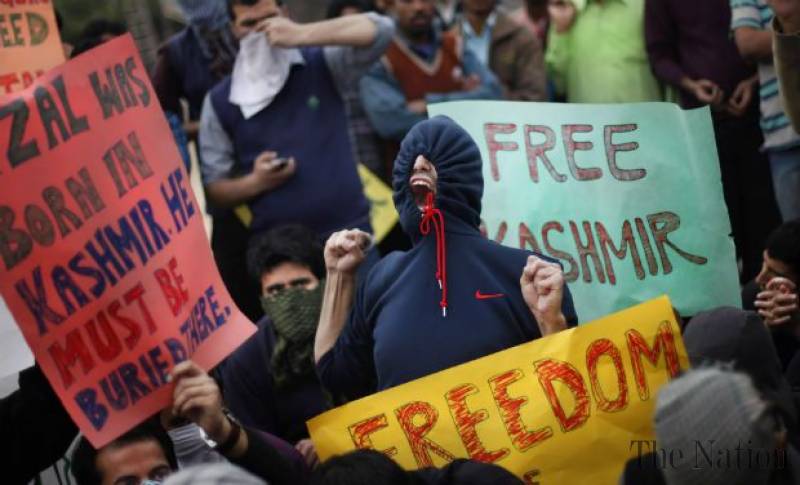
Parchment of Kashmir: Any unitary discourse claiming to encompass reality will be lopsided and suspect

0 Comments

The problems in a society emerge and erupt, when the social, political, cultural and religious climate goes awry. It is the duty of every citizen to restore the society back to its equilibrium, so people live a normal life. The following article by Dr. Nyla Ali Khan just does that. 

Published at: www.WorldMuslimCongress.com and http://MikeGhouseforIndia.blogspot.com 


Mike Ghouse
# # #

Parchment of Kashmir: Any unitary discourse claiming to encompass reality will be lopsided and suspect
The concept of Kashmiriyat is not only cultural but political as well, which can be revitalized by the resuscitation of cultural institutions and the redressal of political grievances   


Dr. Nyla Ali Khan


There is a plethora of opinions on the political future of the conglomerate of Jammu and Kashmir. Is Jammu and Kashmir a principality? An autonomous unit within the Indian Union? An integral part of India? A subversive unit with the Indian Union? A bilateral issue between the nation-states of India and Pakistan? Is the mainstream Indian understanding and interpretation of the Kashmir conflict the only credible one? Is the mainstream Pakistani understanding and interpretation of the Kashmir issue the only credible one? Do the people of Kashmir have a voice in the matter? Is there a space within Kashmiri society in which the democratic aspirations of the populace of Kashmir could be nurtured? Is there a critical discourse on Kashmir that foregrounds the views of scholars and lay people from the state, even if that discourse is in opposition to the mainstream one? These questions have been causing irrepressible angst in me for a while now. Can we break the silence? Can we bring the instability to an end, for our generation and the generations yet to be born?

A large majority of the populace Jammu and Kashmir is troubled, dispossessed and mocked by the processes of democracy, by United Nations resolutions, by armed insurgency, by counter-insurgency, by militarization, and by revisionist histories. The people of the state are yearning for the right to dignity; the right to live decent existences devoid of bestial militarism; the right to work and enable their families to enjoy the basic necessities of life; the right to hold opinions of which others take cognizance; and the right to an existence in which brutalization, demoralization, trauma, and rage are a thing of the past. In addition to the denizens of Jammu and Kashmir, diasporic Kashmiris also suffer from the indelible scars of having lost their homeland, and mourn a lost innocence.

After reviewing the firrst edition of my book Islam, Women, and Violence in Kashmir: Between India and Pakistan, published in June 2009, several Kashmiri academics pointed out to me that autonomy was an inadequate solution to the Kashmir con?ict. The intractability of the Kashmir conflict has made advocates of conflict resolution rather wary of applying a seemingly workable but facile solution to the complex political conflict. Mainstream media, intellectuals housed in academic institutions, formulators of public policy, and think-tanks are quick to point out that regardless of the bloody and seemingly infinite nature of a political, ethnic, or racial conflict, a viable solution can always be found to dilute the fierceness of a conflictual situation. But one is cautioned against glibly advocating a kitsch solution to the Kashmir conundrum by the complexity of the Kashmir conflict, which embodies the brutalities of nation building devoid of myth or self-infatuation.

Although the idea of self-determination collides with military oppression on the contentious site of nationalism, political accommodation can lead a war-weary people out of the prison of duplicitous rhetoric, political domination, and forceful imposition. The debate among political thinkers, scholars, and policy makers about finding viable ways to do justice to marginalized ethnic minorities in Jammu and Kashmir has seemed infinite. Which is the most viable solution to the Kashmir conflict?

Several questions were asked by the students in my Senior Seminar on World Literature at the University of Oklahoma in spring 2010 during the class discussion on translations of Kashmiri short stories at the Senior Seminar on Muslim Women�s Memoirs, in fall 2011, while discussing women in conflict zones. �What is the political status of Kashmir?� �Can Kashmir exist as an autonomous enclave, the security of which is guaranteed by India and Pakistan?� �This might be a dumb question, but does Kashmir have credible politicians?� �If Kashmir is a nuclear flashpoint, why are most Americans unaware of the complexity of the Kashmir issue?� �Does Kashmir have fields of gold and mountains of silver?� �Are you familiar with the Led Zeppelin song, �Kashmir�?� �Are any women in positions of decision making in that part of the world?� �Is the exotic description of Kashmir in novels, poems, and travelogues an attempt to dehistoricize and decontextualize the region and its people?� �How is the reductive portrayal of Kashmir as a romantic and exotic locale going to make the primarily Western readership of, for example, some short stories on Kashmir and Salman Rushdie�s Haroun and the Sea of Stories 3 aware of the political upheaval in the region?� �Why are we talking about political allegory?� �Is there an inextricable link between pedagogy and politics?� �Why can�t the intelligentsia in Kashmir and diasporic Kashmiri intellectuals forge a coalition to come up with feasible solutions to the conundrum?�

I have always enjoyed teaching translations of Kashmiri short stories because some of the stories represent the mythical beauty of Kashmir, on the one hand, and the stultifying atmosphere created by murky politics, on the other. Before getting my students to do a close reading of the stories, I explained the historical backdrop of the Kashmir con?ict; the political situations and maneuvers orchestrated by the two nation-states of India and Pakistan; the onset of the armed insurgency in Jammu and Kashmir in 1989; the simmering resentment, rage, and alienation of the people of Kashmir that added fuel to the insurgency; the unpopularity of formerly populist leaders whom the masses no longer deemed genuine representatives; the nostalgia of expatriate Kashmiris who had been uprooted, dislocated, and dispossessed; the trauma generated by the loss of innocence in a militarized culture; the exclusionary discourse of Indian nationalism, which over the years has subsumed the discourse of Kashmiriyat or a unitary Kashmiri nationalist identity within it; and the erosion of cultural myths, legends, and folklore upon which the edi?ce of Kashmiri society is built.

My students had been unaware of the political swamp in Kashmir prior to our discussion; therefore, it was encouraging to hear them make intelligent comments about world views other than Western-centric ones: about issues of sovereignty, legitimacy of state- hood, representative nature of democracy or lack thereof, discourse of human rights and the bounden duty of international powers to protect fundamental rights in politically conflictual environments, pluralism as an antidote to the orthodoxy of ethnocentric politics, the construction of identity politics, and the implosion of the boundary between state and religion.

The issues that my students came up with can be summarized in the following way: the intricate relationship between the political and cultural power that emanates from metropolitan centers and the peripheral territories in which it manifests itself requires the formation of cultural practices that sustain the persistent disparity in power between the center and the �peripheral world.� This observation helps answer persistent questions. Is the effective political sovereignty of India over Kashmir achieved by force, by political collaboration,or by economic, social, or cultural dependence? Does the political sovereignty of India over Kashmir exist in its most potent manifestation in ideological and cultural practices?

After delving into the role of discourse in constructions of identities and subjectivities for a long time, I have found that dominant political powers use �discourse�� political, militaristic, gender, religious, and cultural�to disseminate the values that mold the ethnic and cultural identities of the dominated as well as the dominator. The strategy of fortifying domination with structures of knowledge creates an unbridgeable gulf between the �center� and the �margin.� Let me generalize using the language of postcolonial theory. The totalizing form of the discourse of the center, and its overpowering impulse to exclude, repress, and incorporate threatening forces, generate a dichotomy between the center and its peripheries.

The legacy of this polarization is a strongly bounded area of social and cultural knowledge that produces veneration for the monolithic center and obedience of the �margins� to it. The practice of political domination is ratified by the authority of academics, institutions, and governments that formulate a methodology, �surrounding it with greater prestige than its practical successes warrant.� The ideology propounded by the dominant order reflects and produces its interests. The representatives of the privileged center of the discourse of power (political, academic, cultural, religious, and institutional) silence the voices that are on the fringes of society. In order to achieve this outcome, the hegemonic order creates structures that cater to its unquestioned authority.

The rhetoric employed by mainstream Indian and Pakistani rhetoricians, politicians, academics, and policy makers has become the authoritative discourse of officialdom that separates itself from the realm of the Kashmiri people. It is a dogmatic discourse that has been used to assert its ascendancy among other verbal and ideological points of view. Meanwhile, the cultural identity of the Kashmiri people is damaged by the erosion of their autonomous institutions, by traumas and terrors generated by insurgency and counter insurgency. Still, the cruel politics of these neighboring nation-states has not obliterated the legacy of a rich heritage.

Frantz Fanon, in particular, espoused the attempt to refurbish social and political consciousness in order to undermine racist, ethnic stereotypes. Although Fanon�s theories were specifically geared to the Algerian national struggle, his characterization of culture as the contentious site where psychological and spiritual emancipation might be achieved is relevant to the Kashmiri context as well. In the case of Kashmir, the pervasiveness of prejudicial notions, particularly after 1989, undermined the self-representation and self-construction of the Kashmiri people. The struggle for autonomy and, some would argue, the legitimate right of self-determination in Kashmir quickly forged discourses in order to oppose the discourse of discrimination that had created a sense of marginalization in the populace.

Fanon famously propounds an anticolonial nationalism as a therapeutic device to cure the psychological and historical torture inflicted by the dichotomies of the culture of dominance. According to Fanon, the fallacy of the racial and culture privileging of the dominant power is confounded when the natives refuse to follow the trajectory charted out for them by the discursive practices of colonialism.

Cultural nationalism challenges and overthrows the hierarchy of ruling ideologies by enhancing a unity among all socioeconomic classes of an occupied area, which it has failed to do in the Kashmir context. This revolutionary stance can eliminate the petty feuds that exist in an area and can replace them with a sanctified notion of nation. History is no longer imposed on them; now they are able to wield memory as a powerful tool. In this process of nationalist self-imagining, the deployment of allegory, as some Kashmiri short story writers have done in their works, can be used to re-create and preserve a jeopardized way of life. Such narratives rewrite history and create symbols of nationhood. They impart resolvability to a disharmonious history.

Instead of a contemptuous dismissal of the power of myth and fetishes, writers explore these as repositories of culture. This process of recuperation makes the hitherto lost voices of the margin audible. A multiplicity of voices and perspectives, as in Parchment of Kashmir: History, Society, and Polity, shuns simple decoding.

The concept of Kashmiriyat is not only cultural but political as well, which can be revitalized by the resuscitation of cultural institutions and the redressal of political grievances. Kashmiri society, like other South Asian societies, is by no means egalitarian or unpatriarchal. A rigidly entrenched gender hierarchy also exists in Kashmir; some substantive attempts have been made to deconstruct such a hierarchy. The role of women in a conflict zone; the reconceptualization of a woman�s identity in a politically militarized zone; intersectionalities of class, education, ethnicity, and religious identity in theorizing a woman�s identity; and women�s agential roles or lack thereof are issues that can no longer be relegated to the background. Any attempt to homogenize Kashmiri society or the politico-cultural discourse on Kashmir would be a dangerously ?awed exercise. People on the margins of society lack the same access to political, religious, cultural, and economic discourses and institutions as those in positions of privilege and power.

The tradition of Rishiism is not dead and buried in the Valley: it continues to bolster a cultural and religious identity that the militarization of Kashmir has not been able to do away with. To that end, the vaakhs of Lal-Ded and the shrukhs of Nur-ud-din Wali form a very important part of the vernacular of semi-literate and illiterate people in Kashmir. At the risk of sounding repetitive, I emphasize that any unitary discourse that claims to encompass the reality of Kashmir would be lop-sided and suspect.


Dr. Nyla Ali Khan is a faculty member at the University of Oklahoma and a member of the Scholars Strategy Network. She is the author of The Fiction of Nationality in an Era of Transnationalism (Routledge, 2005); Islam, Women, and Violence in Kashmir: Between India and Pakistan (Palgrave Macmillan, 2010); Parchment of Kashmir: History, Society, and Polity (Palgrave Macmillan, 2012); The Life of a Kashmiri Woman: Dialectic of Resistance and Accommodation (Palgrave Macmillan, 2014).

Friday, 1 April 2016

Prosecution

0 Comments
ITV News, Delivery driver Junead Khan found guilty of planning terror attack against US military in UK, 1 April 2016 "A delivery driver from Luton has been convicted of preparing to carry out a terror attack on an RAF base in East Anglia where US military personnel are stationed." Tech themes in this story.
 
back to top